


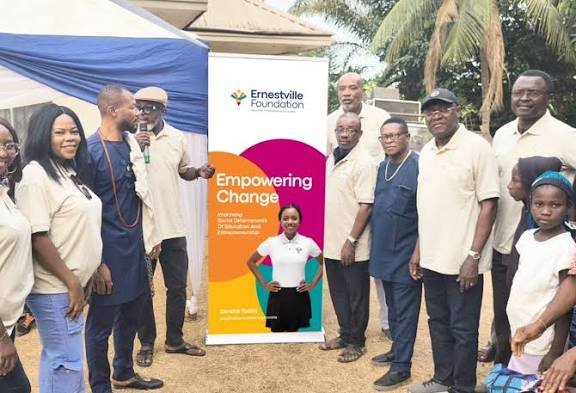
A United States–based nonprofit is quietly transforming education and entrepreneurship across underserved African communities. Known as the Ernestville Foundation, the organisation has become a growing force in closing learning and opportunity gaps for young people in remote areas.
Since its establishment in memory of a Nigerian education pioneer, the Foundation has focused on combining access, technology, and empowerment to uplift local communities. In 2024, it expanded its mission by donating digital devices like iPads and building stronger partnerships with schools. The move aligns with the United Nations Sustainable Development Goals (SDGs) and reflects a commitment to modernising classrooms often left behind by national education systems.
Reviving Academic Excellence in Rural Nigeria
By early 2025, the Ernestville Foundation reached a remarkable milestone. Six students from Ajalli, a historic town in southeastern Nigeria, earned full scholarships to attend the prestigious Government College Umuahia. The school, famous for producing leading figures in academia, governance, and business, now represents a new pathway for rural students to achieve global relevance.
However, the scholarships are not merely financial aid. They mark a deeper plan to rebuild a culture of learning among Nigerian youth. “This effort goes beyond paying fees. It’s about nurturing leaders who will serve their communities,” said a representative of the Foundation.
To ensure students were ready for the competitive entrance, the Foundation organised a three-month preparatory programme, hiring teachers to provide intensive training. Alongside the six admitted to GCU, sixteen girls and four boys who gained entry into other institutions also received ₦50,000 each in educational support.
Innovation, Entrepreneurship, and Community Building
The Ernestville Foundation’s work stretches beyond scholarships. Its long-term strategy blends education with technology and entrepreneurship. Projects such as the Umuabiama STEM+ Academy merge science, engineering, English, and indigenous languages to create well-rounded, culturally rooted students.
In Ajalli, the Enterprise and Innovation Hub trains young people in digital tools, mentorship, and business incubation, empowering them to launch sustainable ventures. The B.A. Okafor Chess Initiative uses chess to develop cognitive ability and creativity, while the Helping Hands Initiative supports families struggling with food, housing, and healthcare challenges.
Registered in the United States as a 501(c)(3) nonprofit, the Foundation has laid out a bold vision to 2035. Its goals include supporting 5,000 scholars, training 1,000 entrepreneurs, establishing five innovation hubs in key sectors such as clean energy and agritech, and improving the lives of one million Africans through direct and indirect outreach.
