


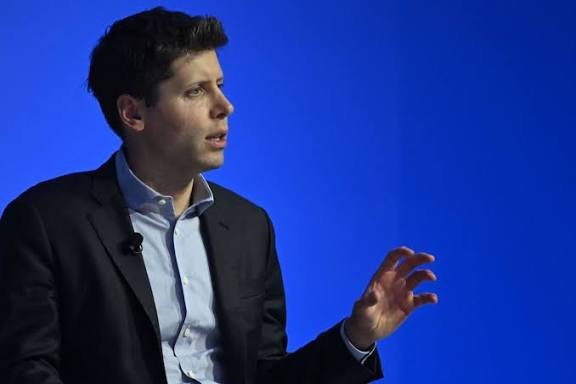
OpenAI has unveiled an ambitious plan to build what it refers to as a “legitimate AI researcher” by 2028. The chief executive, Sam Altman, announced the plan in a livestream on Tuesday and described the system as one that can independently work on complex research projects.
Altman added that OpenAI is already on pace to achieve an intern-level research assistant by 2026. Such rapid advances, he said, show just how far the company’s deep-learning models have come in solving high-level scientific problems.
The announcement coincided with OpenAI’s official transition into a public benefit corporation and the end of its non-profit status. This will let the firm raise more capital, while still maintaining a focus on responsible AI development and research innovation.
Jakub Pachocki, OpenAI’s Chief Scientist, was quoted in the same livestream as saying that the new OpenAI researcher would be “capable of autonomously delivering on larger research projects.” He even added that deep learning systems may be less than a decade away from achieving superintelligence, or a point when AI systems completely surpass human intelligence across key domains.
Pushing the Limits of AI Learning
Pachocki explained that OpenAI’s progress is driven by two core strategies — constant algorithmic innovation and expanding test-time compute, the process that determines how long models can “think” through problems.
He added that today’s systems already stand shoulder-to-shoulder with the best human performers at competitions such as the International Mathematical Olympiad, working effectively across five-hour problem windows. OpenAI wants to take this scaling much further by putting huge computational resources — even entire data centres — behind specific scientific challenges.
Altman believes this could amount to major breakthroughs in medicine, physics, and other fields. For him, the structural change the company is undergoing will ensure it has enough financial strength to sustain this vision.
Under its new setup, the OpenAI Foundation — still a non-profit — will hold a 26% stake in the for-profit entity and guide the company’s research direction. The foundation has also pledged $25 billion toward AI-powered medical research, including efforts to cure diseases.
Meanwhile, Altman said the for-profit arm will oversee infrastructure investments, now estimated at a whopping $1.4 trillion to build 30 gigawatts of computing capacity over the next several years.These efforts, he said, are part of OpenAI’s long-term plan to make artificial intelligence a driving force in global scientific discovery.


I am passionate about crafting stories, vibing to good music (and making some too), debating Nigeria’s political future like it’s the World Cup, and finding the perfect quiet spot to work and unwind.


No Comments