


From DMs to Promise: How RovingHeights is Rewriting Literary Ecosystem
Femi Morgan
Chinedu* stared at his phone, equal parts exhilaration and exhausted. After two years of writing, editing, and sacrificing weekends, his self-published novel, Whispers in the Oil Mill, was finally real. The glowing 5-star reviews from friends and literary blogs were heartwarming. But the message that just popped up on his Instagram was different: “Hello, I saw your posts. I need a copy of your book delivered to my sister in Bama, Borno State. How much, and how soon?”
His heart sank. Bama. Not Lagos, not Port Harcourt, not even Kano city. The logistics were a maze of “No, we don’t go that far,” exorbitant quotes from courier companies, and the gnawing fear of the book, his precious, fragile dream, vanishing into a logistical black hole. This was the unglamorous underbelly of being a modern Nigerian author: you could build an audience online, but the physical journey of your book to a reader could be a mission impossible.
Then, a fellow writer in a WhatsApp group suggested: “Try RovingHeights. They get books anywhere.”
The story of RovingHeights, the bookstore Chinedu would come to rely on, is itself a tale of navigating obstacles. Its founder, Adedotun Eyinade, stumbled into bookselling “by accident.” Around 2010, he identified a critical gap: a lack of reliable distribution connecting authors to bookstores. His first venture was a traditional distribution service. But between the hectic demands of his day job in consulting and the familiar Nigerian plague of “bookstores selling books but not remitting money,” that first iteration, what he calls “the first failure,” quietly stalled.
The second act began not in a boardroom, but in the DMs. In 2015-2016, his sister and co-founder, Tobi, began experimenting on Instagram. She tapped into a burgeoning community of young Nigerians who were discovering and discussing books online. “The reception was quite interesting,” Eyinade recalls with characteristic understatement. This was the “second iteration”: a social media-powered bookstore, proving there was a vibrant, tech-savvy market hungry for stories but underserved by traditional retail.
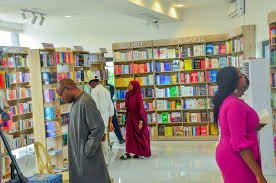
But Eyinade’s vision grew beyond the digital screen. Travels abroad exposed him to bookstores that were community hubs—beautiful spaces for events, conversation, and discovery. He returned convinced Nigeria needed not just book sellers, but book spaces. In 2018, Roving Heights opened its first physical store in Lagos, merging its online savvy with a tangible, welcoming presence.
This hybrid model is what saved Chinedu’s Bama sale. RovingHeights didn’t see a remote, difficult delivery; they saw a reader who needed a book. They’d built a system, a patchwork of partnerships with firms like DHL, CourierPlus, and even pragmatic use of bus parks—precisely for this. “We’ve created multiple options for our customers,” Eyinade explains. “We keep learning.” For Chinedu, it meant a straightforward process: he got his book to their store, they handled the rest at a cost that didn’t eclipse the book’s price. The trust was implicit.
Today, RovingHeights is a success story, bootstrapped and run lean by Eyinade, his sister, and his wife. They have grown from Instagram DMs to multiple physical stores and a robust website. They have become a critical partner for publishers and a beacon for self-published authors like Chinedu, even building a proprietary platform for authors to track their sales in real-time.
Yet, for every success story like Chinedu’s, there are nights when Adedotun Eyinade’s last read is a complaint message. The victory is hard-won and perpetually incomplete. The bridge they’ve built, while sturdy, spans a terrain of relentless challenges.

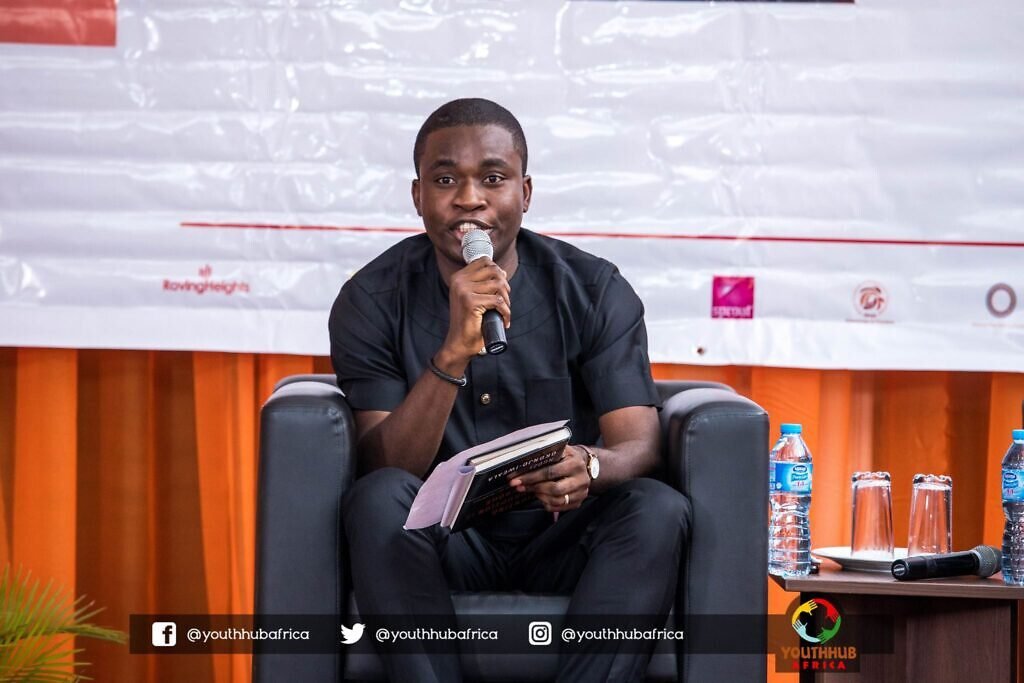
The most daunting is The Logistics Labyrinth. Eyinade is quick to clarify in an interview with Techstoriex, “I am not a logistics company,” but his mission depends entirely on them. This reality transforms every sale into a calculated risk. The triumph of delivering to Bama is tempered by the stark economics he outlined in the interview, a book priced at ₦15,000 can demand a ₦7,000 delivery fee to some parts of the country. “What would be ideal,” he muses, “is a reliable, affordable national postal service.” In its absence, Roving Heights operates as a nimble navigator, constantly patching together a network from courier firms, bus parks, and sheer willpower. This labyrinth is the constant, expensive background hum to their literary mission.
Then there is The Fraud Factor, a stark reminder that even a community of readers isn’t immune to the country’s harsh realities. Eyinade recounts the chilling case of the customer placing colossal, repeated orders. “We realized he was using a foreign card… we shipped a few before we said, ‘You know what, we’re not delivering this to you.’” They caught it, but the loss stung. It’s a delicate balance, operating on the precious, prepaid trust of genuine readers while vigilantly watching for the scams that prey on it. This incident reinforces Eyinade’s reflection that they are, in some ways, protected by their niche. “The risk is somewhat limited… it’s different from selling groceries.” But it is never zero.

These daily battles shape the scale of the dream. Eyinade’s vision is ambitious but deliberately grounded. He speaks not of a hundred-store empire, but of a strategic footprint of maybe 15-20 outlets. “I don’t think Nigeria can support a hundred stores,” he says with the sober insight of over a decade in the trenches. The potential is vast—a nation of 200 million—but the accessible market, the literate middle class with discretionary income for books, is still coalescing. His dream is not blanket coverage, but deep, meaningful cultivation: stores planted where they can truly nourish a literary community, becoming local institutions rather than mere retail points.
So, while Chinedu celebrates his book’s journey, Eyinade is already thinking of the next hurdle, the next town, the next way to balance cost and care. The story of RovingHeights is a continuous loop of solving tangible problems, a lost package, a fraudulent order, a decision on a new city—all in service of an intangible ideal: making sure that no reader, and no author’s dream, is ever too far away to reach.


Femi Morgan is an accomplished journalist, culture influencer, and publisher with over 15 years of experience in media strategy, creative direction, and public relations. As a distinguished member of The PUNCH Editorial Board, Femi has won the Nigeria Media Merit Awards and was twice nominated for the Diamond Awards for Media Excellence. One of his editorial contributions was highlighted by The Economist of London. He has contributed over 3000 editorials, and direct financial impact to The PUNCH's bottom line through adverts. He is currently a Managing Consultant at Techstoriex .



No Comments