


*Ken is a freelance data analyst based in Lagos Nigeria, he tells me “This month alone I have had several terrible experiences with lack of power. The first time, I went into an interview with an international client in Canada almost an hour late because the light is my area is bad, and I couldn’t find anywhere to charge my devices. I was lucky because that particular client understood, because many others just believe you are incompetent. I had to cancel a well-paying job offer from the other one from Germany because the timeline of the project was impossible because of this same power situation. “It’s so frustrating.” he concluded with a sigh.
This scene plays out daily at both individual and corporate levels across Africa, where the continent’s ambitious digital transformation collides with a fundamental obstacle: unreliable electricity. While African techies from Nairobi to Cape Town are producing world-class innovations in fintech, agritech, and artificial intelligence, the lack of consistent power threatens to undermine the entire ecosystem, affecting everyone from solo developers to multinational investors eyeing Africa’s potential.
The Daily Grind: Techies vs. The Grid
*Jerry is a Fintech startup founder who moved his operations from Nigeria to Canada in 2024. “It wasn’t planned at all. Imagine you having to explain to customers that the reason their money is hanging is because of power issues. I don’t have a godfather in CBN that can save me from EFCC abeg. He continued “And those are the existing customers. We are talking about scaling the company, but how do we get new customers on board when they see us as a potential red flag because of our location?”
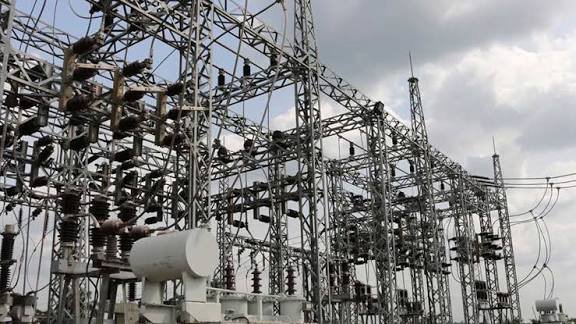
According a The Nation Newspaper, report, in 2024 the Nigerian National power grid collapsed 12 times, 12 times in 2025, and already once in 2026, an average of once a month. Leo Stan Ekeh, Chairman of Zinox Group said at a recent tech event that the infrastructure African techies need is particularly power-hungry. Modern software development requires multiple monitors, powerful processors, and fast internet routers. AI development is even more demanding, with GPUs consuming several hundred watts during training sessions. “You cannot compete on AI with the likes of America and China with this constant national grid failures and inconsistent broadband.”
Startups: Innovation in Survival Mode
In this piece I wrote on the need for startups to start building on the African continent, I noted that one of the reasons African tech startups get pushed away from the continent is because of power issues. For Africa’s tech startups, unreliable electricity transforms the business model itself. Energy costs that would be negligible line items in Western startups become existential concerns in Africa. Andela, the talent marketplace that has trained thousands of African developers, once reported spending up to 30% of operational costs on backup power solutions. Imagine trying to compete with Silicon Valley while dedicating nearly a third of your budget just to keeping the lights on.
AI has become the buzzword for tech in Africa in the last decade, and there is no doubt that it has the power to positively impact Africa’s young population. However, for AI-focused startups, training large language models or computer vision systems requires running clusters of GPUs continuously for days or weeks. A single power outage during training can mean starting from scratch, losing not just time but thousands of dollars in computational costs. Some African AI companies have resorted to renting cloud computing from AWS or Google Cloud—ironically sending money out of the continent because local infrastructure can’t support their needs.
The Investor’s Dilemma: Betting on Potential, Hedging on Power
Africa’s tech scene presents a paradox: massive opportunity shadowed by infrastructure uncertainty. The continent’s young, mobile-first population, rapid digitalization, and gaps in traditional services create perfect conditions for tech disruption. Yet the power situation adds a risk premium to every deal. We constantly argue like Eliot Pence does that foreign investors suffer from outcome fallacy when it comes to investment in Africa, but we cannot but admit that the risk aversion is not unfounded, and irregular power supply is the major cause.
The power issue also distorts company valuations. When 20-30% of operational expenses go toward energy rather than growth, the unit economics that make startups attractive deteriorate. Burn rates increase, paths to profitability lengthen, and the multiple investors can justify decreases. An African startup might need twice the capital to achieve the same milestones as a similar company in a stable power environment, making investment rounds larger, more dilutive, and harder to close.
Some investors have responded by factoring power infrastructure into their investment theses. Funds now explicitly budget for generator installations, solar panel arrays, and battery systems as part of their capital deployment. While pragmatic, this approach essentially means international capital is subsidizing Africa’s energy deficit rather than funding pure innovation—a misallocation of resources that wouldn’t be necessary in markets with reliable grids.
The geographic concentration of investment reflects these concerns. Africa’s tech funding overwhelmingly flows to a handful of cities with relatively better power infrastructure—Lagos, Nairobi, Cape Town, Cairo. Brilliant entrepreneurs in secondary cities with worse electricity often can’t attract capital regardless of their ideas’ merit. The power situation thus entrenches inequality, ensuring that Africa’s tech revolution remains limited to a few privileged nodes.
Powering Forward: The Path Ahead
Ken* mentioned above tells me: “I didn’t really believe in solar technology for the longest time, but recently a friend of mine who has a solar setup recently showed me how reliable it is. I have called his installer to come and help me to install my own setup this week. The cost is really high, but wetin man go do?
Startups are pioneering creative solutions forming cooperatives to bulk-purchase solar installations, negotiating dedicated power lines with utilities, or designing software architectures specifically optimized for intermittent connectivity. Yet these workarounds, while ingenious, don’t substitute for systemic infrastructure development. Javier Blas, energy and commodities columnist at Bloomberg, points out that for all of China’s loud championing of green energy, their fossil fuel production(coal, oil and natural gas) is still higher than its peak in 2015. The message here that as much as Africa has a comparative advantage in solar energy, solar energy is not enough to turn the tide of Africa’s energy story. As Miranghe Pela, MD, Exusia Power and Gas Limited adds: “Africa’s off-grid story is not solar alone. Captive power using gas- via pipeline CNG or LNG plays a critical role in satisfying industrial and baseload demand.”
Abdulaziz Alobaidli, Chief Operating Officer of Masdar, the renewable energy company owned by the United Arab Emirates, agrees with the sentiment by Pela: “Sometimes we talk a lot about renewable energy sources but we forget that infrastructure is need to move electricity from one location to another. So there has to be as well a lot of focus on building and modernizing the grid to accommodate a lot of energy supply coming from renewables and other sources.”
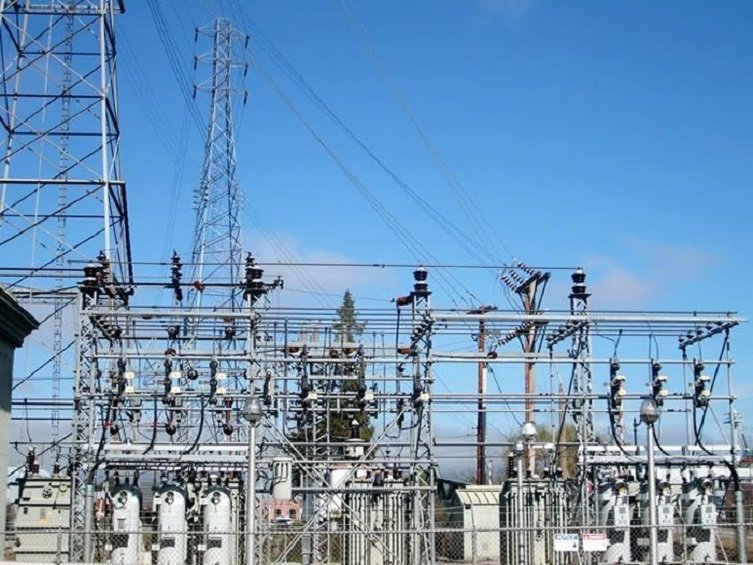
This month Olu Verheijen, Special Adviser to Nigeria’s President, Bola Tinubu on Energy says that the Nigerian government will be raising NGN4 trillion ($2.5billion) to finance comprehensive solutions for the country’s severe electricity deficit. Part of the funds will be set aside for transmission infrastructure upgrades. Similarly, Rwanda’s investments in renewable energy have made Kigali increasingly attractive to data center investments. Kenya’s embrace of geothermal power is providing more stable baseload electricity.
The ironic truth is that AI and advanced computing could help solve Africa’s energy problems—optimizing grid management, predicting demand, and enabling renewable energy integration. But developing these solutions requires reliable power, creating a chicken-and-egg dilemma.
Africa’s tech talent, entrepreneurial energy, and market opportunities are undeniable. The innovations emerging from the continent—from mobile money pioneered in Kenya to Nigerian drone delivery systems—prove that adversity breeds creativity. Yet for Africa to fully claim its place in the global digital economy and realize its AI potential, the lights need to stay on. Until African developers can work without watching battery indicators, until startups can focus on code rather than kilowatts, and until investors can evaluate African tech companies by the same metrics, they use everywhere else, the continent’s digital revolution will remain in the dark—both literally and figuratively.
*not their real names
