


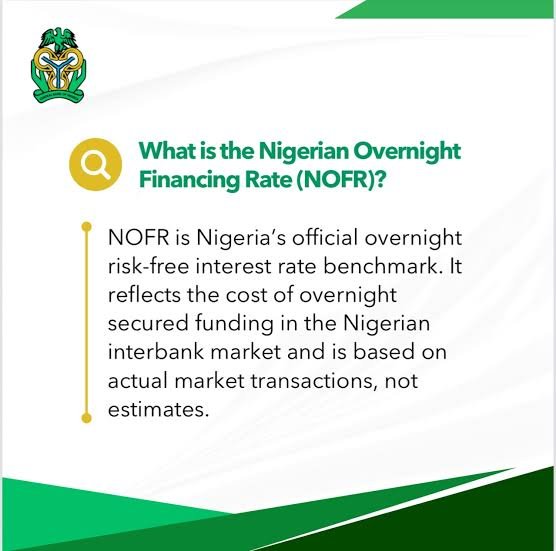
When the Central Bank of Nigeria, in collaboration with the Financial Markets Dealers Association, announced the Nigerian Overnight Financing Rate — a standardised benchmark aimed at enhancing transparency, strengthening monetary policy transmission, and deepening Nigeria’s money market — it was easy to read the development as something exclusively relevant to commercial banks and bond traders. But for Nigeria’s fast-moving technology and fintech ecosystem, the NOFR is anything but a backroom affair. It could, in fact, be one of the most consequential regulatory shifts the sector has seen in years.The timing is no accident. Nigeria’s fintech sector is undergoing one of its most ambitious structural transformations. Paystack, the Stripe-owned Nigerian payments giant, acquired Ladder Microfinance Bank in January 2026, giving itself greater control over the funds it processes after a decade focused purely on payments infrastructure. Barely three months later, Flutterwave, the pan-African payments titan, followed suit — securing a national microfinance banking licence, allowing it to hold customer deposits and issue loans directly for the first time in its biggest market. The CBN has upgraded the licences of OPay, Moniepoint, Kuda, PalmPay, and Paga to national MFB status, officially recognising that these digital finance companies have outgrown regional operations and require proper licensing to operate across all 36 states and the FCT.This mass migration of Nigerian fintechs toward MFB licensing represents a seismic shift in ambition: from payment processors to full-stack financial institutions. And it is precisely into this landscape that NOFR arrives — not as an obstacle, but as a new kind of infrastructure that these companies will need to understand deeply.
A Benchmark Built on Reality, Not Guesswork
At its core, NOFR reflects the cost of overnight secured funding in the interbank market, based on actual transactions rather than estimates — thereby reducing the risk of manipulation and improving market confidence. This is a meaningful departure from Nigeria’s old benchmarking system, where quoted rates could diverge sharply from the reality of what liquidity was actually costing participants. Transaction-based benchmarks are generally seen as more robust, particularly in volatile conditions when indicative rates can diverge from actual funding costs.For fintech companies now operating as or alongside MFBs, this matters enormously. As these firms move into lending, deposit-taking, and treasury management, their cost of capital becomes a live operational variable — not just an abstract figure cited in investor decks. Paystack MFB, for example, has announced plans to offer working capital loans, merchant cash advances, and overdrafts to its 300,000 business customers. The pricing of those products will be shaped, directly or indirectly, by the prevailing short-term rate environment. A credible, transaction-backed benchmark like NOFR gives fintechs a reliable anchor for these calculations.
Unlocking New Product Architecture
Beyond lending, there is a broader product development story. A transparent benchmark provides a foundation for pricing repo transactions, commercial paper, floating-rate notes, and derivatives. For the more sophisticated fintechs — those offering treasury management tools or banking-as-a-service infrastructure — this opens up an entirely new layer of product design. Floating-rate instruments, previously difficult to price consistently in Nigeria’s opaque market, can now be tethered to a credible rate that the CBN publishes transparently and governs rigorously.The CBN itself has stated that NOFR will “enhance the effectiveness of monetary policy, support financial innovation, boost investor confidence, and strengthen risk management across the financial system.” That phrase — “support financial innovation” — is not incidental. It speaks directly to the ambitions of tech companies building on Nigeria’s financial rails.Flutterwave’s strategy illustrates the point. By securing a banking licence, Flutterwave gains greater control over how funds move within its ecosystem, including the ability to hold deposits and manage financial flows across its platform. That kind of vertically integrated financial architecture demands sophisticated internal rate management. NOFR provides the external reference point against which Flutterwave and companies like it can benchmark their own liquidity positions.
The Investor Confidence Factor
There is also the question of foreign capital. Nigeria’s tech ecosystem has long relied on international venture capital and institutional investment, and attracting that capital requires demonstrating systemic trustworthiness. Financial analysts believe NOFR could attract foreign portfolio investments, as international investors often rely on transparent and standardised benchmarks when entering emerging markets.The introduction of NOFR positions Nigeria alongside leading global benchmarks such as SOFR in the United States, SONIA in the United Kingdom, €STR in the Eurozone, and TONA in Japan — while also complementing African benchmarks such as JIBAR in South Africa. For a Series B or Series C fintech founder preparing a roadshow to London or New York, the existence of a recognised, globally-comparable overnight rate in Nigeria is a quiet but powerful signal of market maturity.
The Compliance Burden and the Opportunity
That said, NOFR is not without its demands. Banks and other financial institutions will need to integrate the rate into contracts, trading systems, and risk models. Transitioning away from existing benchmarks may require adjustments in pricing frameworks and operational processes. For fintechs that are already navigating the operational complexity of running MFB licences — with their higher capital requirements, stricter oversight, and customer protection obligations — this adds another layer of sophistication to manage.The firms best placed to benefit will be those that invest now in the treasury and risk management capabilities NOFR demands. Those that treat it merely as another regulatory footnote may find themselves underpricing credit risk or poorly hedged as the rate evolves.Infrastructure, Not Just RegulationPerhaps the most useful way to understand NOFR is as infrastructure — the kind that rarely makes headlines but quietly determines which financial systems can scale and which cannot. Nigeria’s fintechs have spent a decade building transaction infrastructure. They are now building banking infrastructure. The NOFR ensures they do so with a reliable rate compass in hand.Over time, NOFR is expected to support financial innovation and the development of new products in the money market, while reducing reliance on less transparent benchmarks and strengthening overall market integrity — as the CBN has noted. For a sector that has grown precisely by substituting transparency for opacity wherever it found it, that is a promise that should resonate deeply with every fintech founder in Lagos, Abuja, and beyond.The new rails are being laid. The question is which companies will move fastest to build on them.
