


For years, the most common sound in a Nigerian startup office wasn’t the ping of a Slack notification or the hum of a server rack. It was the splutter of a generator kicking in.
Things may be about to change, not because the national grid has been fixed, but because investors and state governments are seeing an opportunity and are getting some level of power to do something about it.
Investors eyeing Nigeria’s long-troubled power sector are increasingly bypassing broad national grid exposure in favour of state-led electricity deals with identifiable demand, contracted off-takers, and clearer governance. According to a PwC report published this month following the firm’s Annual Power and Utilities Roundtable, what is happening is a quiet but consequential shift in how Africa’s most populous country finances its energy future. For the Nigerian tech ecosystem specifically, the implications run deeper than kilowatts and megawatts. This is a story about whether the infrastructure conditions for a truly scaled digital economy can finally take root.
The Grid Was Never the Foundation
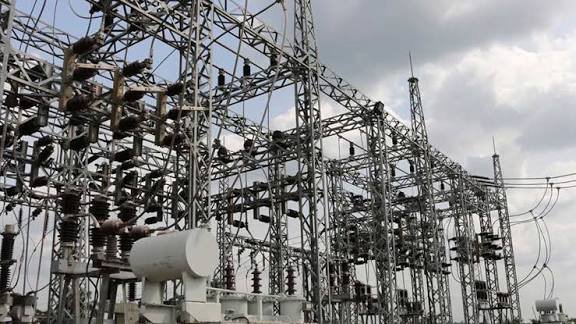
To understand what’s changing, you have to understand where Nigeria’s power issues started from and where they are. Nigeria’s grid has 14 to 16 gigawatts of installed capacity but delivers only around 5 GW to consumers. For comparison, the generating capacity of private diesel and gasoline generators in Lagos alone is around 19.4 GW — total national electricity demand is over 40 GW, and unmet demand may be another 60 GW. That staggering gap has long been the silent tax on doing business in Nigeria. Every tech founder building a product in Lagos, Abuja, or Kano has effectively been running two energy budgets: one for electricity, one for diesel.
The World Bank estimates that Nigeria’s faulty grid costs the country 2 percent of its GDP annually. For a startup ecosystem still fighting for global investor confidence, that is a structural drag that no amount of hustle culture can paper over.
The 2023 Electricity Act was meant to be the turning point. The pivot documented in the PwC report reflects the early commercial consequences of the Electricity Act 2023, which devolved significant regulatory authority from federal institutions to Nigeria’s 36 states. Two years into implementation, the law is beginning to reshape not just who regulates power, but crucially, who gets funded — and that is the detail that matters most for the tech sector.
States as the New Energy Venture Capitalists
The most striking development is the speed at which state governments are moving to fill the vacuum. Lagos, a fast-expanding metropolis of more than 20 million residents, has invited bids for the construction of up to 4,000 megawatts of gas-fired power plants to cover the national grid shortfall. The state said it required 6,000 MW of electricity but was receiving only 2,000 MW at most from the grid. Businessday NG
That ambition matters enormously for Nigerian tech. Lagos remains home to the overwhelming majority of the country’s funded startups, fintech operators, and data infrastructure. Reliable, predictable power in Lagos is not a quality-of-life issue; it is a competitive necessity. Founders choosing between Lagos and Nairobi or Cairo as a base of operations are, in part, making an energy calculation.
Lagos is embedding electricity planning into broader development priorities rather than treating it as a standalone technical problem. That sends a signal to financiers: tariffs will be credible, enforcement will be predictable, and state backing is real. That signal matters as much to a Series A tech investor evaluating operational risk as it does to a power sector financier evaluating tariff structures.
Lagos is not alone. In Ekiti, the state government has granted operational licences to 14 electricity investors, including three distribution companies, four generation companies, two mini-grid providers, and five meter asset providers. Ekiti currently receives only about 20 to 25 megawatts from the national grid, far below the estimated 120 megawatts needed to meet local demand. Meanwhile, three Northwest governors — Kano, Katsina, and Jigawa — have unveiled a tri-state electricity market, acquiring equity stakes in a core distribution investor in what analysts describe as the first coordinated subnational electricity market in Nigeria.
What This Means for the Tech Ecosystem
The implications for Nigeria’s technology sector are layered, and not all of them are straightforward wins.
On the positive side, the move toward state-led power deals creates something the Nigerian tech sector has always lacked at scale: predictable, localized energy infrastructure with an identifiable governance structure. Investors are now assessing projects on a case-by-case basis, with bankability driven by regulatory clarity, tariff credibility, and cash-flow visibility. That same logic applies upstream: a data centre operator or cloud infrastructure provider considering Nigeria as a regional hub needs exactly those assurances before committing capital.
The tech sector is also a direct beneficiary of the metering push accompanying these reforms. Federal metering programmes, the Presidential Metering Initiative and the World Bank-backed Distribution Sector Recovery Programme, target deployment of more than 13 million meters over the medium term. Businessday NG Smart metering at scale creates the data infrastructure for energy-as-a-service models, a space where Nigerian startups are already experimenting, and where the devolution of power regulation opens new licensing pathways that simply did not exist before 2023.
But there are real risks too. Regulatory overlap between the Nigerian Electricity Regulatory Commission and emerging state regulators is already visible. Outstanding unresolved issues, including legacy subsidy treatment, taxation, levies, tariff assumptions, and ownership structures, should not be left to drift into the next fiscal cycle. For a tech company operating across multiple states, a patchwork of inconsistent energy regulations is nearly as problematic as no regulation at all. The promise of devolution could fragment into a compliance nightmare if federal and state frameworks are not deliberately harmonised.

The Bigger Picture
There is a version of this story that ends very well for Nigeria’s technology sector. States competing on regulatory quality and energy reliability create a kind of federalism that could benefit founders the way competitive business environments benefit entrepreneurs in other jurisdictions. A startup in Enugu or Kano operating on a reliable, state-backed electricity market, with a credible tariff structure and local regulatory accountability, is a fundamentally different proposition from the same business subsidised by generator diesel and crossed fingers.
Sector revenues rose from approximately 1 trillion naira in 2023 to about 1.7 trillion naira in 2024 and are projected to reach 2.3 trillion naira by the end of 2025. Grid collapses fell sharply from about 12 incidents in 2024 to one in 2025. Businessday NG These are real, measurable improvements, and they matter to the venture capitalists, development finance institutions, and global tech companies evaluating Nigeria as a market.
The investor’s retreat from the national grid is not a vote against Nigeria. It is a vote for a more granular, accountable version of Nigeria, one built state by state, deal by deal, meter by meter. For a tech ecosystem that has spent decades building workarounds for structural failure, the prospect of infrastructure that actually works, even if it arrives little by little, is worth paying very close attention to. The generator may not fall silent overnight. But for the first time in a long time, there is a plausible roadmap for why it eventually might
