


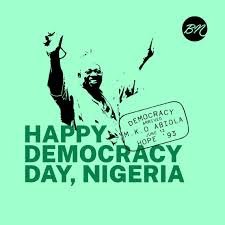
Every June 12, Nigeria pauses to remember an election that never officially ended. On June 12, 1993, Chief Moshood Kashimawo Olawale (MKO) Abiola of the Social Democratic Party squared off against Bashir Tofa of the National Republican Convention in what is still widely regarded as the freest and fairest presidential election in the country’s history. Voters turned out in large numbers, the contest cut cleanly across the ethnic and religious lines that had long defined Nigerian politics, and early results pointed to a decisive Abiola win, including in parts of the north. Then, before the National Electoral Commission could announce a final result, the process simply stopped.
On June 23, 1993, military ruler General Ibrahim Babangida annulled the election, citing irregularities and legal challenges that were never substantiated. The country plunged into a crisis from which it would not fully recover for years: a short-lived interim government, a coup by General Sani Abacha, Abiola’s self-declaration as president and subsequent arrest for treason, years of detention, and his death in 1998 just as a transition to civilian rule was finally taking shape.
Thirty-three years on, it’s worth asking a simple but unsettling question: could an annulment like that happen today? If the same scenario unfolded in an era of smartphones, live result uploads, and social media, would Nigeria’s institutions have been able to bury the people’s verdict the way they did in 1993?

The information vacuum that no longer exists
The single biggest difference between 1993 and now is speed. In 1993, election results moved through official channels at the pace of official channels, collated locally, transmitted by phone or courier, and announced centrally by the National Electoral Commission. That slowness created a window. In that window, a small group of military and political actors could control the narrative, delay announcements, and ultimately suppress results that had already effectively been seen and celebrated by millions of Nigerians at polling units. That window barely exists anymore. Today, results are recorded at the polling unit on result sheets, often photographed on the spot, and, under Nigeria’s current electoral framework, uploaded to a public viewing portal shortly after counting. Whatever debates remain about how reliable or complete that upload process is, the principle has shifted: the polling unit result is no longer a private document held by officials until a central body chooses to release it. It is, at least in theory, public from the moment the count ends.Layer smartphones and social media on top of that, and the 1993 playbook becomes almost impossible to execute in its original form.
In 1993, a result could be quietly never declared. Today, a result that thousands of party agents, observers, and ordinary citizens have already photographed and shared cannot be un-declared without the absence becoming the story itself.
Abiola’s lead would have gone viral by nightfall
Picture June 12, 1993 with today’s tools. As polling units closed, party agents and observers would photograph result sheets and post them to WhatsApp groups, X, and Facebook. Local journalists and citizen reporters would begin compiling unofficial tallies almost in real time, the way election-day “situation rooms” run by civil society groups do now.By the time Abiola’s lead became apparent in the south-west, it would already be visible, not as a rumor passed between elites, but as a pattern emerging from thousands of individual data points uploaded by ordinary people. His unprecedented strength in parts of the north, the detail that most unsettled the military establishment in 1993, would not have stayed contained within NEC’s internal reporting. It would have been the headline trending nationwide: a Muslim-Muslim ticket from the south-west winning Kano.In other words, the very feature of the 1993 result that made it so threatening to the status quo, its cross-regional, cross-religious appeal, is precisely the kind of result that spreads fastest on social media, because it breaks expectations and confirms a national mood.
Annulment would become the story, not the solution
When Babangida’s government announced the annulment on June 23, 1993, it had eleven days of silence and confusion to work with. People knew something was wrong, but the absence of a declared result was itself ambiguous, something officials could spin as a pause for “legal review.”In a social media environment, that ambiguity collapses almost immediately. If unofficial tallies and uploaded result sheets had already shown Abiola ahead by a wide margin in real time, any announcement halting the process, let alone annulling it, would not be received as a procedural pause. It would be received, instantly, as theft, with the receipts already public. The gap between “what happened” and “what the government says happened” would be measured in hours, not days, and that gap would itself become the dominant news story, amplified by international media, diaspora networks, and foreign election observers reacting in real time.
Civil society mobilization at a different speed
The annulment did trigger major protests, strikes, and civil disobedience, particularly in the south-west, organized through trade unions, student movements, and pro-democracy groups. But organizing those movements took time: information traveled through meetings, pamphlets, and word of mouth, and coordination across cities was slow and risky.A modern equivalent would look more like what Nigeria has already seen in moments such as the #EndSARS protests: hashtags forming within minutes, location-tagged footage of security force movements, crowdfunding for legal aid and medical support organized openly online, and a level of real-time coordination across cities that 1990s activists could only have dreamed of. Whether that translates into a different ultimate outcome is an open question, but it would almost certainly compress the annulment-to-mass-mobilization timeline from weeks to days, and make it far harder for the state to manage the optics.
What wouldn’t change
It’s tempting to treat technology as a guarantee against this kind of outcome, but the harder truth is that tools alone don’t determine results. A regime determined to hold onto power despite a clear electoral loss still has options that smartphones don’t neutralize: internet shutdowns, restrictions on social media platforms, intimidation of journalists and activists, and the blunt instrument of force. Several countries have demonstrated in recent years that connectivity can be throttled or cut entirely during politically sensitive moments.What technology changes is the cost of those actions and the speed at which the world finds out about them. An internet shutdown today is itself a visible, internationally reported event, evidence of something to hide, rather than a quiet absence. In 1993, Nigeria’s information environment could go dark without the rest of the world immediately noticing. In 2026, going dark is loud.
The unfinished promise
In 2027, Nigeria will head to the polls again, the 8th time since that monumental election. It is important for us to keep in mind that the most important continuity between 1993 and today isn’t technological at all. June 12 became a touchstone not because of how votes were counted, but because of what the annulment represented: a moment when the will of millions of ordinary Nigerians, peacefully and clearly expressed, was overridden by a small group of people who decided they knew better. Smartphones, live uploads, and social media make it harder for Ibrahim Badamasi Babangida to pull his ultimate move. They don’t make it impossible, and they don’t substitute for the institutional independence, legal accountability, and political will that ultimately turn a counted vote into a sworn-in government.
What they do is shrink the space in which a stolen mandate can hide. In 1993, the truth of who won took decades to be publicly acknowledged. Today, it would take hours for the truth to be known and the real test would shift to what happens after everyone already knows it.That, more than any single piece of technology, is the real measure of how far Nigeria’s democracy has come since June 12, 1993 and how much of the original promise still remains to be fulfilled.
