

IBADAN, Nigeria – Mahmood Yakubu stepped down as chairman of Nigeria’s Independent National Electoral Commission on October 8, 2025, capping a nine-year tenure that saw him steer the nation’s votes through some of its most turbulent times. Appointed in 2015 by then-President Muhamadu Buhari, Yakubu arrived at a moment when public faith in elections hung by a thread. Off the back of the flawed 2015 polls, where manual processes had allowed widespread electoral fraud.
A quiet academic from Bauchi with a background in conflict management, he quickly signaled that technology would be his cornerstone for restoring credibility. Over the years, Prof. Yakubu’s leadership transformed INEC from a paper-heavy bureaucracy into a body that leaned towards reliance on digital tools, culminating in the Bimodal Voter Accreditation System—or BVAS—for the 2023 general elections.
That innovation promised to revolutionize how Nigerians cast their ballots, but it also exposed the gaps between ambition and execution, leaving a legacy that is as much about bold steps forward as it is about hard lessons learned.
BVAS and the Promise of a New Beginning

When Yakubu took office, the electoral toolkit in use was the Smart Card Reader. It was introduced by Prof. Attahiru Jega for the 2015 elections, with its primary function being to verify voters’ Permanent Voter Cards through biometric scans, but it faltered spectacularly under the weight of Nigeria’s diverse polling units and unreliable power supply. There were widespread reports of devices freezing, network failures, and polling officials were forced to fall back on incident forms. This opened the door to electoral fraud.
Yakubu, reappointed in 2020 by President Muhammadu Buhari, drew from those early setbacks to push for something more robust. By 2021, INEC had begun piloting BVAS in off-cycle state elections, starting with the Anambra governorship race held in late 2021. The system combined fingerprint and facial recognition to accredit voters, aiming to eliminate underage voting, multiple registrations, and ghost entries that had plagued previous cycles. It was a direct response to mounting pressure from opposition parties and civil society groups, who wanted a potential game-changer for transparency.
The Electoral Act Amendment
As the Electoral Act was amended in 2022 to mandate the electronic transmission of results, Yakubu positioned BVAS as the linchpin. According to the commission, there would be no accreditation without a biometric match, and results uploaded in real time to the INEC Result Viewing Portal, or IReV, for public scrutiny.
The promise from INEC was simple yet profound: this process will enable every Nigerian voter to watch the transfer of votes from polling units to collation centres, stripping away the manual process that had long shielded electoral fraud.
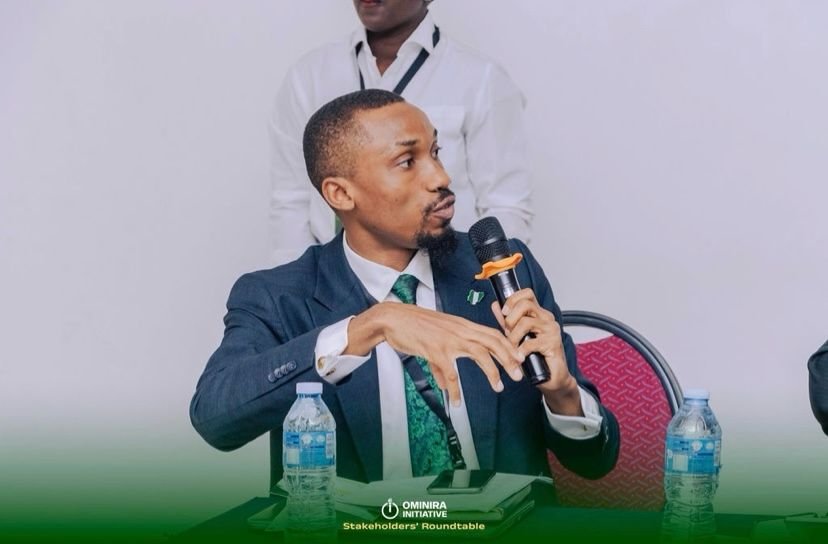
Public policy analyst Basil Abia remembers the buzz when BVAS was unveiled. “I was really happy,” he recalls. “I thought it was going to make the process seamless, even more transparent… prevent ballot snatching and stuffing.” For many stakeholders like him, it felt like the dawn of a fairer fight.
Nigeria’s Most Expensive Election Yet
Funding the development and deployment of this technology wasn’t cheap, and Yakubu didn’t shy away from laying out the costs to lawmakers. In his 2021 budget defense, he pegged the total for the 2023 elections at N305 billion, with a significant portion earmarked for technology. Of the N355 billion overall allocation for INEC that year, around N117.1 billion went towards procuring and deploying electoral gadgets, including the BVAS machines.
Each of the 176,606 units costs roughly N100,000, a steep jump from the N18.8 billion ICT budget of 2015. Deployment began in earnest on February 25, 2023, for the presidential and National Assembly polls. Over 1.4 million ad-hoc staff were trained nationwide, devices preloaded with voter registers, and clusters set up for low-signal areas.
It was meant to be seamless. All the voter had to do was scan a thumb or face, BVAS would accredit the voter, the electoral officer would count the ballots, photograph the sheets, and upload to IReV before collation.
What could go wrong?
The Glitches That Gripped the Nation
But February 25 brought a rude awakening. In the INEC BVAS 2023 election saga, the system hailed as fraud-proof started showing cracks almost from the start. Polling units across the country reported BVAS failures—fingerprint scanners that wouldn’t read thumbs, facial recognition that failed to recognize, and devices that simply ran out of battery in remote spots.
In Rivers State, erstwhile Governor Nyesom Wike stood for nearly an hour at his unit while technicians fiddled with faulty machines. Some parts of the country witnessed alphabetical glitches, with voters whose surnames started with random letters unable to accredit. In Delta and Enugu, queues snaked for hours as overvotes slipped through unchecked. Late arrivals of materials compounded the chaos. Many units across the country were inactive until 3 pm.
By evening, IReV, the portal designated to collate results in real time, was a ghost town. Despite hundreds of polling units wrapping up, zero uploads appeared. Uploaded sheets were badly mutilated. Ordinary sheets of papers were transmitted to IReV as election results.
Two years later, the IReV platform still does not have complete results from the 2023 elections. What’s worse? There have been no explanations, no consequences, just radio silence on the failure of the tech that the commission spent over a hundred billion naira of taxpayers’ money to develop and deploy.
Many believe the nonchalant manner in which this failure was handled best describes Yakubu’s tenure.
To Whom Much is Given…
Voters like Joel Maduka felt the sting firsthand. “I sincerely see no reason why INEC would claim to have spent over 100bn and the elections still looked shabby as always,” he says. “I felt like that was a colossal waste of money… Folks were looking for their names. Some people were not allowed to vote because they changed location even after they’d updated it on the INEC servers.”
Officials struggled too, fumbling with devices that seemed foreign in their hands. “Some INEC officials were also struggling to operate the new device… Seems like some were not properly trained,” Maduka adds. “As far as I’m concerned, I dare say the money was wasted or maybe looted by the people up there.”
Yakubu addressed the nation eventually, admitting the glitches but blaming them on the sheer scale of the rollout. Pilot tests in smaller elections like Edo 2020 had worked fine, he said, but nothing prepared the commission for 93 million registered voters nationwide. INEC had run mock drills on just 436 units, far short of the 176,000 needed for a true stress test.
INEC’s Flaws, INEC’s Fault
Critics were unforgiving. Civil society groups like Yiaga Africa flagged mismatches between declared results and observed forms in 97 per cent of cases in states like Rivers and Imo. Opposition leaders decried the failures as deliberate sabotage, with reconfiguration of devices allegedly wiping audit trails.
Basil Abia points to deeper flaws: “Whenever there’s ambiguity… somebody wants to profit from it.” He recalls Yakubu’s pre-election assurances that results would only count if uploaded via BVAS, only for manual workarounds to creep in during the chaos. “Technology on its own is good, but it doesn’t solve the problem if there are no legal consequences,” Abia warns.
Turnout plummeted to 27 per cent, the lowest in decades, fuelling claims that distrust had kept voters home. For the March 18 governorship and state assembly polls, Yakubu promised fixes—better-trained staff, backup power, and stricter no-manual rules. Uploads sped up, and BVAS failures dropped, but violence remained a wildcard, with devices smashed in opposition strongholds.
A Mixed Verdict and Eyes on 2027
Yakubu’s tech legacy has raised divided opinions. On the plus side, BVAS did what it was built for in many spots. It slashed multiple voting, made cleaner accreditation possible, and gave citizens a front-row seat via IReV to spot discrepancies in real time. Social media lit up with live calls on fudged sheets, a transparency leap from the old days. Yakubu himself called the 2023 cycle Nigeria’s “most credible” yet, pointing to court rulings that upheld BVAS mandates despite challenges.
However, his critics see a different picture. Incompetence in scaling, ignored warnings from ICT experts, and a budget bloated by overruns that didn’t translate to reliability or results. The INEC BVAS 2023 elections exposed Nigeria’s infrastructure woes—spotty networks, power gaps, and human error—as much as INEC’s own lapses. Voter apathy surged, and faith in the system dipped, with polls showing only 35 per cent of Nigerians trusting the outcome.
Setting the Agenda for Amupitan’s INEC
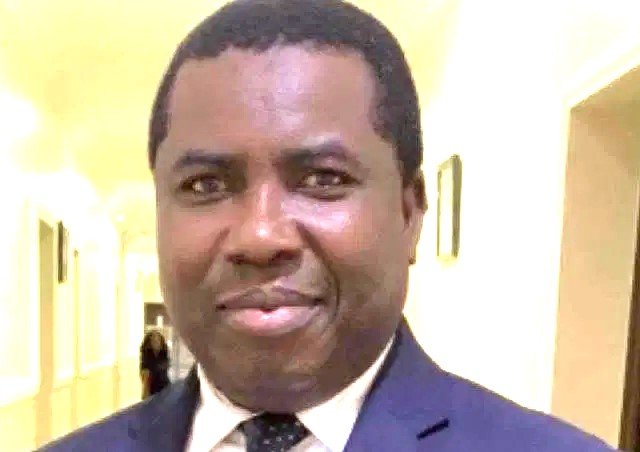
As Yakubu hands over, attention shifts to his successor. Professor Joash Amupitan was appointed by President Bola Tinubu on October 9 and confirmed by the Senate on October 16. A Senior Advocate of Nigeria from Kogi State with deep roots in electoral law at the University of Jos, Amupitan steps into a hot seat. Civil society groups like YIAGA are already calling for bolder reforms, including full electronic collation to end manual tinkering. There are demands for integration with NITDA for cyber defenses and digitized collection of voter feedback.
Basil Abia’s advice for the new INEC chair is to push for a “quasi-automated voting process,” starting with dual options, electronic where possible, with paper only as backup. “We need to move away from paper-based voting to automated voting, and most importantly, a constitutional backing to eliminate possible backdoors,” he says. “Even if it’s just small introductions, we can build the process brick by brick. Everything that has a beginning has an end.”
Drawing from Germany’s swift, secure counts, Basil says Amupitan could invest in cloud computing and cybersecurity, piloting in upcoming by-elections to build momentum. For the 2027 elections, BVAS could evolve. Facial scans can be the fallback option in low-signal zones, deploy AI to flag anomalies early, and require mandatory open stress tests.
Additionally, the Federal Government’s 3 Million Technical Talent (3MTT) scheme can play a pivotal role in subsequent election training and staffing, providing a tech-savvy talent pool for easy recruitment.
Less Than Two Years to 2027
But with just 15 months to go, Amupitan must move fast if. He must rebuild trust through transparent pilots and enforce the Electoral Act’s electronic teeth without loopholes. If he pulls it off, he will write his name in the annals of history. If not, 2027 risks repeating the glitches that scarred 2023. On Amupitan’s promise to investigate the 2023 glitch, Abia remains pragmatic: “He’s paying lip service to it, obviously… There was no glitch. It was just intentional.” Still, fixing the tech and the will behind it starts with accountability.
Yakubu’s tenure ends on a reflective note. Clearly, his leadership didn’t quite meet expectations, but he left the commission more tech-savvy than he found it. Basil Abia believes the tech can work, but the overall process still grapples with the human side of democracy. For Dr. Amupitan, the challenge is clear: make the machines work for the people, not against them.


I love to write about the things I love to read about. That includes sports, tech, DIYs, literature, music and entertainment. When I'm not writing, I'm either sleeping, reading, watching a funny Netflix series or eating a bowl of abula.


No Comments