


From fare slashes to fake rides, xenophobic pranks to safety scandals—Nigeria’s relationship with the ride-hailing giant has become a masterclass in corporate chaos. Now, as Bolt tries to explain its way out of yet another controversy, one question looms: Does this company have what it takes to run smooth operations, or is perpetual crisis simply its business model?
Lagos, Nigeria — When a company feels compelled to hold a media briefing just to explain how its payment system works, you know something has gone deeply wrong.
That’s exactly where Bolt found itself in recent weeks—standing before journalists in Lagos, armed with calculators and pie charts, trying to convince an increasingly skeptical public that drivers actually earn “more than 75 per cent” of each fare. The fact that this explanation was necessary at all tells you everything about the state of trust between Africa’s most popular ride-hailing platform and the thousands of drivers who keep it running.
“Sustainable ride-hailing is not about commissions in isolation,” declared Weyinmi Aghadiuno, Bolt’s Head of Regulatory & Policy Africa, during the hastily arranged briefing. “It is about ensuring that drivers can earn consistently, passengers can access affordable and reliable transport, and cities can depend on safe, well-functioning mobility systems.”
It’s the kind of corporate-speak that sounds reassuring in a conference room but rings hollow to drivers like Sunday, who watches fuel prices climb every week while his take-home pay shrinks. “They can explain all they want,” he told colleagues after the briefing. “My tank still costs the same to fill, but I’m taking home less.”
And therein lies Bolt’s Nigerian paradox: a company that dominates the market—holding 66% of ride-hailing share according to Queva Advisory—yet cannot seem to go three months without sparking controversy, protest, or outrage.
If controversies were currency, Bolt would be Nigeria’s richest company.
A Crisis Timeline: When Did It All Go Wrong?
To understand how Bolt ended up desperately explaining basic arithmetic to journalists, you need to trace the pattern. Because this isn’t a one-off problem—it’s a recurring nightmare that suggests something fundamentally broken in how the company operates in Nigeria.
The Midnight Fare Massacre (Early 2025)
It started with what drivers now call “the midnight massacre.” In early 2025, Bolt drivers across Lagos woke up to discover their fares had been slashed by nearly 50% overnight. A trip that earned ₦17,500 the day before suddenly paid less than ₦9,000.
Bolt’s explanation? The company claimed it was responding to “demands from a group of drivers requesting lower fares to attract more customers.”
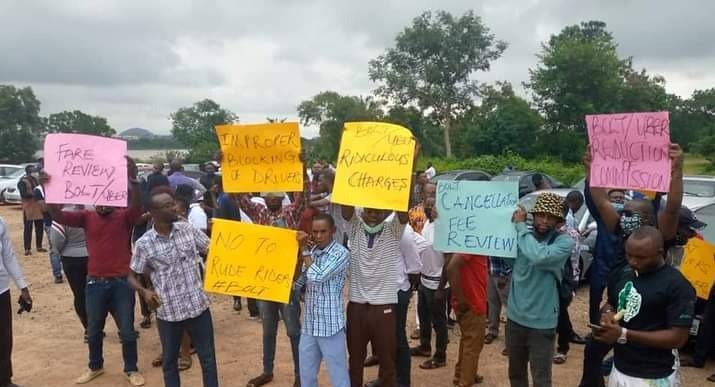
The response was immediate and furious. “No set of drivers went to their office,” Lagos State Union Chairman Jaiyesimi Azeez told reporters, his voice tight with anger. “Bolt creates groups to control drivers, offering money to some and presenting it as a collective decision.”
Driver Kanmi was more blunt: “Why would any driver in their right mind ask for fares to be reduced? It makes no sense. Do they think we’re stupid?”
The backlash forced Bolt into a partial reversal within days. Sunday, who tested the adjusted rates, noted some improvement: “I think they have increased the price now. I tested a trip from the Airport to Phase 1, and it’s back to 17,500 naira, with Comfort at 20,000 naira.”
But the damage was done. Steven Iwindoye, Public Relations Officer of the Amalgamated Union of App-based Transporters of Nigeria (AUATON), confirmed what everyone already knew: “They have increased their pricing by some percentage. They haven’t reverted to the old price, but it’s better than a few days ago.”
Bolt Nigeria’s General Manager, Osi Oguah, defended the move as a “fare adjustment” designed to “optimize driver earnings in the long run.” The explanation satisfied no one. For drivers already drowning in Nigeria’s fuel crisis—petrol prices have tripled since 2020—the episode reinforced a belief that had been growing for months: Bolt doesn’t understand or care about their economic reality.
The Negotiation That Never Was (November 2024 – February 2025)
Between November 2024 and February 2025, Bolt quietly piloted something drivers had been demanding for years: a “negotiate” feature that allowed riders and drivers to agree on prices upfront, similar to inDrive’s successful model.
Drivers loved it. Finally, they had some control over their earnings. Finally, they could factor in fuel costs, traffic conditions, and distance before accepting a ride.
“I would have loved it if the negotiate feature was left permanent,” said Celestine Finbar, a Lagos-based Bolt driver with over four years on the platform. “After they slashed commissions, we were barely surviving. Negotiation gives us more control, like we’re finally being heard.”
Then Bolt killed it.
“Between November 2024 and February 2025, we conducted a limited-time pilot of a fare negotiation feature,” a Bolt spokesperson told TechCabal, adding coldly that there were “no plans to introduce the negotiate feature more broadly.”
No explanation. No consultation. Just a feature that worked for drivers, quietly deleted from the app.
“My assumption is that the feature didn’t solve the problem the way they imagined it, and it also doesn’t impact revenue,” said Ayodeji Audu, a Lagos-based mobility analyst, speaking what everyone was thinking.
Translation: It gave drivers too much power and potentially reduced Bolt’s cut. The brief experiment revealed something troubling—Bolt is willing to test driver-friendly features, but only if they don’t threaten the bottom line. When drivers’ interests conflict with profit margins, the drivers lose. Every time.
When Social Media Became Warfare (August 2024)
Perhaps the strangest chapter in Bolt’s Nigerian saga came in August 2024, when geopolitical tensions spilled into the app in the most absurd way imaginable.
Following xenophobic controversies around Miss South Africa contestant Chidimma Adetshina’s Nigerian heritage, social media users in South Africa and Nigeria turned ride-hailing apps into weapons. South Africans began ordering fake Bolt rides in Nigeria, then canceling once drivers arrived. Nigerians retaliated, booking rides in Johannesburg and Cape Town, only to cancel after drivers had burned fuel and time.
Rosco, a Lagos-based Bolt driver with over 17,000 rides since 2016, described his nightmare: “I accepted a ride from a person with a South African number who wanted to be picked up near the University of Lagos. Ten minutes after I arrived, the customer was still nowhere to be seen. Over the next 40 minutes, I received 16 more fake requests, all from South African phone numbers. These people were holding me ransom.”
Mathew Ineh told Rest of World he stopped using the app entirely after receiving at least 10 fake bookings. “I chatted two of them up to ask them why they were doing this,” Ineh said. “One told me it’s Nigeria versus South Africa. The other lady apologized.”
The chaos caused artificial surge pricing across multiple cities, frustrating real passengers and devastating drivers who wasted fuel during Nigeria’s worst petroleum crisis in years.
Bolt’s response? Restricting cross-border ride requests—a feature that had existed for 11 years without incident until users exploited it. Yahaya Mohammed, Bolt’s Nigeria Country Manager, promised to investigate compensation for affected drivers. “Currently, we are carrying out an in-depth analysis of the rides that were booked, and then the kilometers that the drivers wasted, and then seeing whether there’s room for that,” he said on Arise TV.
Months later, many drivers say they never received a naira. The incident highlighted a pattern that has become Bolt’s signature: systems that can be easily manipulated, crisis responses that are reactive rather than preventive, and promises that quietly evaporate once the headlines fade.
The Safety Crisis Nobody Wants to Talk About
Behind all the fare disputes and fake rides lies something darker: a safety problem that Bolt seems unable or unwilling to fix.
In March 2022, Juliet Nnaji, a 23-year-old content creator, ordered a Bolt ride to Maryland in central Lagos. When she asked the driver to pull over a few blocks early, he became enraged, called her a prostitute, recorded her on video, and punched her in the face—twice—in front of witnesses.
Her story is not unique. Rest of World spoke with eight Bolt users who experienced what they described as criminal behavior: harassment, sexual assault, kidnapping, robbery, and driver impersonation.
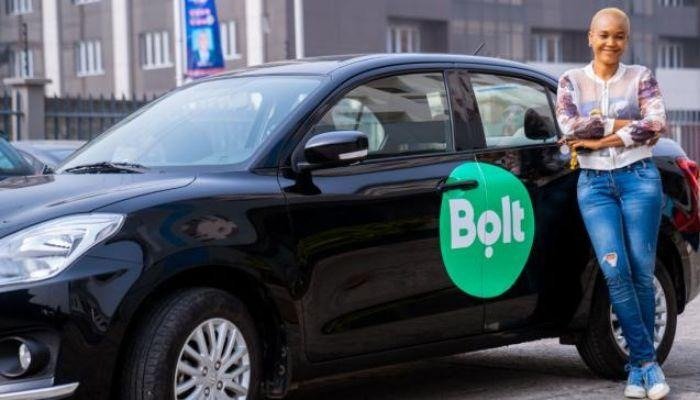
The root cause? According to three drivers who spoke anonymously, Bolt performs only minimal background checks compared to Uber. This was corroborated by Daniel Arubayi, a researcher at Oxford University’s Fairwork institute who has studied Nigeria’s platform economy.
“When they came in, their entire selling point was that joining was easier than Uber,” explained Gbenro Ogundipe, a long-time driver partner. “The problem is they don’t hold the same standards as Uber. I know Uber later relaxed their standards because they were losing all their drivers to Bolt, but it’s still not the same. In the old days we used to do a psychometric test before you could drive on Uber. They didn’t do that on Bolt.”
Even more disturbing: a Rest of World investigation uncovered Bolt drivers selling verified accounts to unknown third parties via Facebook groups. These black-market accounts allow completely unvetted individuals to operate as legitimate Bolt drivers, putting passengers at catastrophic risk.
“Harassment (driver-to-passenger and passenger-to-driver) was a constant issue during my time at Bolt,” one former employee told Rest of World, speaking on condition of anonymity. “But this is a reflection of the general security situation in the country.”
That explanation is both revealing and infuriating. Yes, Nigeria has security challenges. But Uber operates in the same environment with demonstrably fewer safety complaints. The difference isn’t the country—it’s the standards.
Benjamin Hundeyin, public relations officer of the Lagos State Command of the Nigerian police, told Rest of World that few victims report harassment on ride-hailing platforms. “These incidents happen in pockets. But a formal report needs to be made to commence an investigation. Unfortunately, few Nigerians go ahead to file these reports.”
Which raises an uncomfortable question: Is Bolt’s safety record actually better than reported incidents suggest, or are victims simply giving up on justice because they know nothing will change?
The Commission Math That Doesn’t Add Up
Which brings us to the present crisis—the one that prompted Bolt to gather journalists and walk them through grade-school arithmetic.
During the recent Lagos briefing, Bolt used a ₦5,000 fare as an example. According to the company’s breakdown, drivers take home more than 75% after the balance covers Bolt’s commission, VAT, and mandatory government charges.
The explanation is technically accurate. It’s also wildly insufficient.
Because what Bolt’s carefully constructed pie chart doesn’t show is this: when fuel costs ₦800 per liter (up from ₦165 in 2020), when vehicle maintenance has tripled in price, when spare parts are imported at exchange rates that have collapsed from ₦380 to over ₦1,500 per dollar, taking home 75% of a fare means nothing if that 75% doesn’t cover your costs.
“They’re playing with numbers,” one driver said after the briefing. “After fuel, vehicle maintenance, and their deductions, what’s left barely feeds my family. They can show me all the percentages they want. My reality is that I’m working harder and earning less.”
Bolt insists its commission funds “behind-the-scenes functions that passengers and drivers rely on daily”—safety tools, insurance support, customer service, and continuous app development. Weyinmi Aghadiuno emphasized that “the entire ecosystem depends on technology investment, safety systems and efforts that encourage more passengers to book rides over time.”
It’s a reasonable argument. Platforms do have costs. Technology does require investment. The question is whether Bolt’s commission structure fairly distributes the economic burden, or whether it protects profit margins by squeezing drivers.
The evidence suggests the latter. When Bolt entered Nigeria in 2016, its commission was 15%—ten percentage points lower than Uber’s 25%. That’s how the company won market share. But over time, drivers allege, effective commissions have crept higher through additional fees and opaque deductions. By 2025, many drivers claim they’re effectively paying 25% once everything is calculated.
AUATON, the drivers’ union, is demanding a 5% commission cap. Bolt hasn’t dignified the proposal with a response.
“They should either allow us to determine the price or reduce the percentage they take,” Biola Adeoye, an Uber driver, told The Guardian. “We have families to feed, vehicles to fix and medical care to pay. They should consider us and treat us fairly. We are not asking for too much.”
But to Bolt, apparently, they are.
The Offline Trip Crackdown: Safety or Profit Protection?
In November 2024, as driver frustrations mounted, Bolt launched what it called a safety initiative but what many drivers experienced as economic warfare.
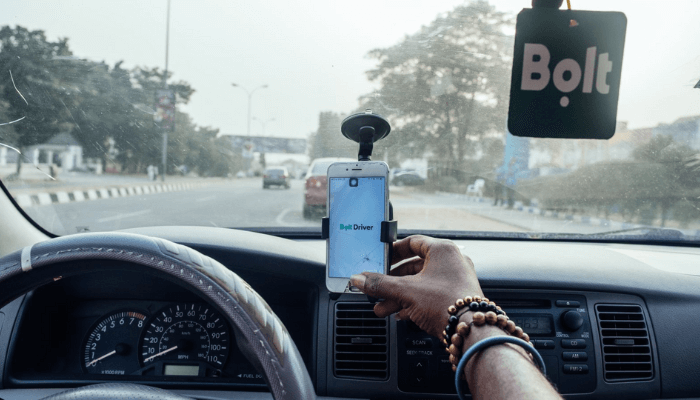
The company began aggressively enforcing penalties against drivers who take trips offline—meaning outside the app, usually to avoid commission fees. Using algorithmic monitoring, Bolt started flagging violations and imposing earnings deductions or suspensions.
By early 2025, the company reported a 42% drop in offline trips, crediting the crackdown as part of a $107 million global investment in rider safety.
“If you’re not transacting within the app, you’re exposing yourself to danger,” Osi Oguah warned. “We’ve seen what happens when rides go offline. This isn’t just about business, it’s about keeping people safe.”
Bolt pointed to increased usage of safety features like Trusted Contacts (up 290% since enforcement began) and Pickup PIN (over 5,000 active users) as proof the policy works.
The safety argument isn’t entirely wrong. Offline trips do carry risks—no GPS tracking, no emergency button, no trip record if something goes wrong. But it’s also not the whole story.
For drivers, offline trips represented a survival mechanism—a way to bypass commissions during an economic catastrophe. When fuel prices quadruple and your platform won’t negotiate on fees, going offline isn’t greed. It’s mathematics.
Is This Just Nigeria, Or Is Bolt The Problem?
This is a reasonable question given Bolt’s global presence. Is this litany of crises unique to Bolt’s toxic Nigerian experience or indicative of larger structural problems with the way the company does business around the world?
Regrettably for Bolt, the answer appears to be yes.
Drivers in the Netherlands successfully sued ride-hailing apps to reclassify them as employees rather than contractors, entitled to benefits. Bolt has faced similar lawsuits in several European countries. Earlier this year, the UK Supreme Court ruled Uber drivers were workers entitled to minimum wage and benefits, not independent contractors. This sets a legal precedent that will likely apply to all gig labor platforms operating in the UK, including Bolt.
Scour reviews for Bolt drivers in other countries and you’ll find the same complaints Nigerian drivers have: sudden account suspensions with little or no explanation, unresponsive customer service, arbitrary fare changes imposed without consultation, and commission fees drivers complain are predatory.
The pattern repeats itself country after country, continent after continent: lure drivers in with low commissions and lax standards, then slowly raise commissions and drop standards once you’ve locked them into the platform and scraped the bottom of the driver labor pool. Promise partnership, then treat drivers like slaves.
The problem is worse here because Nigeria amplifies every single weakness in Bolt’s Nigerian operations. Fuel shortages turn Bolt’s reasonable commission into a driver-can’t-make-a-profit crisis.
When Will The Air Clear?
Which circles back to my original question about when the air will clear: Between Nigeria and Bolt, when will things stop being shitty for everyone? The honest answer is probably never. Here’s why.
There are five fatal problems with Bolt’s operations in Nigeria, and they feed into each other cyclically:
1 The Low-Standards Trap
Bolt first established its market share in Nigeria by making it easier for drivers to sign up than it was with Uber. Part of “easier” was notoriously lax screening processes during onboarding. To improve safety, Bolt would need to improve those standards, driving away drivers to competitors who won’t hold out.
Race to the bottom? Sure, we can do that. Race back up to legitimate safety standards? Much harder.
2. The Commission Contradiction
Drivers like lower commissions, which is why Bolt positioned itself as the driver-friendly alternative. But Bolt needs to increase commissions—i.e.,extract more value from drivers—to meet investor expectations and turn a profit. Drivers can’t have it both ways: Bolt can’t be both cheaper for riders, more profitable for investors, and more generous to drivers. Someone has to lose. Bolt has decided that won’t be drivers or investors.
3. The Trust Deficit
Trust is hard to build and easy to lose. Bolt has lost it in spades over the last several years, thanks to a series of controversies too numerous to list: Surprise fare slashes followed by half-hearted rollbacks after driver outcry. A feature allowing drivers to negotiate fares was tested for two weeks, then killed with no explanation. Safety concerns after drivers get robbed or assaulted and either can’t get support from Bolt or find promised improvements roadblocked by unreasonable requirements. Promises of compensation during crunch times, like driver strikes, that drivers later complain were unfairly deducted from their accounts. Brief explanations that feel like insults.
4. The Competitor Dilemma
Bolt isn’t the only ride-hailing platform in Nigeria. Companies like Uber, Indrive, Rida, and LagRide face many of the same complaints. As long as that’s true, Bolt can always attract drivers who’ve been burned by these companies with the same tactics these companies are using to screw Bolt drivers. This creates a race to the bottom, no individual company can win unless everyone raises standards simultaneously.
What Needs To Happen (But Probably Won’t)
1. The Nigerian authorities start enforcing meaningful regulations like proper background checks, transparent and publicly published commission structures, and actual consequences for when safety features don’t work or drivers are unfairly treated. (Hint: it won’t happen until politicians show some damn political will after years of letting ride-hailing apps play Nigerian drivers like fiddles)
2. Every platform plays by the same rules with driver welfare and safety standards standardized across the industry. Not gonna happen until the federal and state governments actually decide that’s what they want and lead an unprecedented level of coordination with every stakeholder to get there.
Plus, companies have to want this to happen and be willing to give up the flexibility that makes them “profitable” in the first place.
3. Platforms recognize legitimate driver unions like AUATON as bargaining partners, respect the National Collective Agreement signed in May of last year, and start actually consulting drivers on decisions that affect their livelihoods and well-being. Companies that view drivers as fungible inputs rather than stakeholders have no reason to change this behavior.
4. Bolt actually starts being transparent about things drivers care about. Commissions. Exactly how deductions are calculated. Where drivers’ money goes. Safety statistics. Driver earnings. Passenger complaints and how they’re resolved. Transparent enough to allow external audits or investigations? Highly unlikely.
The Bottom Line
After nearly a decade in Nigeria, Bolt has achieved remarkable market dominance. By conventional metrics—market share, ride volume, app downloads, brand recognition—the company is a spectacular success.
But scratch the surface and you find an operation defined by crisis, contradiction, and broken trust. Drivers feel exploited. Passengers question safety. Regulators circle with increasing suspicion. Controversies arrive with seasonal regularity, each one prompting corporate explanations that satisfy no one.
The question “When will the air clear?” may be fundamentally naive. It assumes Bolt treats these issues as problems to be solved. What if they’re simply costs to be managed? What if the current model—where drivers bear most of the economic risk, passengers accept mediocre safety standards, and regulators issue warnings without enforcement—works perfectly well for Bolt’s purposes?


I am passionate about crafting stories, vibing to good music (and making some too), debating Nigeria’s political future like it’s the World Cup, and finding the perfect quiet spot to work and unwind.

No Comments