


Drivers in Lagos are now seriously revisiting an idea that first surfaced in 2024: building their own local ride-hailing platforms to compete directly with global giants like Uber, Bolt, and inDrive. The conversation, largely dismissed when it began, has gained new urgency following a recent coordinated strike that rattled the industry.
The three-day industrial action, which ran from 16 to 18 March, was organised by the Amalgamated Union of App-Based Transporters of Nigeria (AUATON). Thousands of drivers simultaneously logged off Uber, Bolt, inDrive, and Lagride, causing widespread disruption across Lagos and neighbouring Ogun State.
For many drivers, the strike was not just a protest. It was a turning point.
When Enough Is Enough
Drivers operating on these platforms say they are battling rising fuel prices, soaring vehicle maintenance costs, inflation, and daily living expenses — all while fare structures remain largely unchanged.
According to AUATON, an average ride-hailing driver in Lagos may generate roughly N60,000 in gross daily earnings. However, after platform commissions, fuel costs, feeding, maintenance, and payments to vehicle owners — since many drivers operate hired cars — take-home income drops to less than N3,000 per day.
That is a staggering gap. And drivers say it is no longer bearable.
“For years, drivers have operated under extremely difficult conditions,” the union said in a statement during the protest. “The cost of fuel continues to rise, vehicle maintenance has become more expensive, and operational expenses keep increasing, while fares remain unsustainable.”
The union also warned that many drivers now spend up to 15 hours on the road just to break even, raising serious concerns about fatigue-related accidents for both drivers and passengers.
Uber driver Emmanuel Obiora was blunt about what he believes the solution must be. “I have said it countless times: the only solution is that we have our own app. We need an app that will work in favour of drivers, not to the detriment of drivers,” he said.
What a Homegrown App Would Cost
AUATON’s spokesperson previously stated that three indigenous ride-hailing apps are already operational, and that the union’s community is also developing its own platform to, in his words, end exploitation and modern-day slavery.
Still, the road ahead is not simple. Building a fully featured ride-hailing app comparable to Bolt or Uber typically costs between $30,000 and $250,000, depending on the complexity, the development team’s location, and the features involved. It is no small undertaking for a group of drivers already struggling to break even daily.
The Platforms Push Back
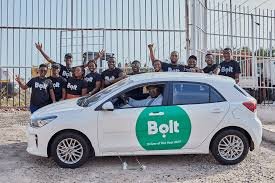
The ride-hailing companies have not stayed silent. Bolt’s Head of Regulatory and Policy for Africa, Weyinmi Aghadiuno, argued during a February media briefing in Lagos that public debates often fixate on commission percentages without considering the broader operational ecosystem needed to run digital marketplaces. Using a typical N5,000 trip as an example, Bolt stated that drivers keep more than 75 per cent of the total fare, with the remainder covering platform commissions, taxes, and operational investments.
“Sustainable ride-hailing is not about commissions in isolation,” Aghadiuno said.
Bolt also pointed to a €100 million safety investment announced in November 2024, saying the initiative contributed to a 42 per cent reduction in offline trips in Nigeria by July 2025.
Uber, meanwhile, struck a conciliatory tone. “Drivers are at the heart of our business, and we remain committed to engaging constructively with them through regular roundtable discussions,” a company spokesperson said. Uber also cited an economic impact assessment showing that drivers collectively earn N6.1 billion annually through access to the platform.
However, AUATON disputed that claim. The union said no formal communication had been received through its official channels, describing Uber’s statements about ongoing dialogue as misleading.
Drivers Take It to Government
Beyond the platforms, AUATON has written to the Lagos State House of Assembly and Governor Babajide Sanwo-Olu, calling for laws that regulate commissions, introduce transparent fare-setting, and strengthen safety protections across the industry.
“The app-based transport sector remains critical to Lagos State’s economy,” the union said in its petition, warning that without proper regulation, the industry risks becoming economically unsustainable.
The tension in Lagos is not an isolated case. Similar disputes have surfaced in Nairobi, Kampala, and Dar es Salaam, pointing to a broader reckoning between global ride-hailing platforms and the African cities they operate in.
Whether Lagos drivers succeed in building their own apps or not, one thing is clear — the old arrangement is running out of road.


I am passionate about crafting stories, vibing to good music (and making some too), debating Nigeria’s political future like it’s the World Cup, and finding the perfect quiet spot to work and unwind.


No Comments