


For millions of Nigerian post secondary school students, the Unified Tertiary Matriculation Examination (UTME) conducted annually by the Joint Admissions and Matriculation Board (JAMB) represents the most critical academic gateway of their lives. With the UTME 2026 registration expected to run from early February to early March, and the exam itself likely taking place between late April and early May, candidates are preparing in an education environment that looks very different from that of previous generations.
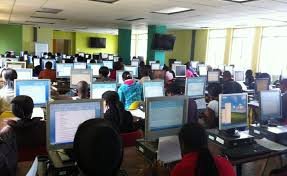
*Okey, 45, a Lagos based architect remembers the years with nostalgia. “I sat for the UME twice (JAMB usually conducted two separate exams, UME for Universities and PMPCE one for Polytechnics, Monotechnics, and other Degree awarding institutions before 2010). I first wrote it in 1998, before I finally passed and gained admission in 1999. JAMB(sic) was an entire experience those years. We had to buy many textbooks, and a lot of paper past question guides. The exam day was like a warzone, the centres were often chaotic and incidents of violence were common. And the examination malpractice was almost an entire institution on its own.” (Okey’s story of UME examination day chaos and exam malpractice is similar to my own. In 2005, as a 15-year-old I had to travel from my home Ile-Ife to neighboring Ilesa to write the exam because JAMB banned Ile-Ife centres in 2005 due to widespread examination malpractice in the town in the 2004 exam).
Okey adds “I have a niece who wrote the exam last year (2025), and my own son will be writing the exam this year (2026). Seeing the preparations we have to make for him; it reminds me of how much things have changed.”
The Roles of YouTube, Social Media, and Informal Learning
Okey, mentioned above muses: “I find it so surprising that YouTube has become a major source for resources for my son’s preparations.” YouTube has become one of Nigeria’s largest JAMB classrooms. Numerous teachers, exam coaches, and education influencers now upload free videos explaining complex topics, breaking down past questions, and offering exam-day strategies.
*Olaronke, 50, whose 16-year-old daughter is also writing the exam this year can relate. “WhatsApp and Telegram study groups have also played a major role in our preparation. The groups that we are in have enabled collaborative learning, peer motivation, and quick access to shared resources. She sounds a note of warning though. “Misinformation spreads easily, outdated syllabuses are sometimes shared, and excessive notifications can distract rather than support learning. We have to try our best to stay focused.”

Technology Inside JAMB: What Has Improved
Technology has not only transformed preparation. it has reshaped JAMB itself. The adoption of Computer-Based Testing (CBT) remains one of the board’s most significant reforms. CBT has reduced large-scale examination malpractice. For example, JAMB has introduced using the candidates National Identity Number as part of registration requirements to weed out potential impersonators (Incidents like in my year when whole centres, even towns and cities are barred from registering for the examination because of exam malpractice have largely become a thing of the past.) Technology has also improved standardization, and enabled faster release of examination results.
For many candidates, UTME is their first formal interaction with a computer. In this sense, JAMB has become an unexpected driver of digital literacy, forcing students to develop basic computer navigation skills that are increasingly necessary in higher education and the modern workplace.
Biometric verification systems, including fingerprint and facial recognition, have further strengthened exam integrity. These technologies have significantly reduced impersonation and increased public trust in UTME results. In addition, JAMB’s centralised data systems, including the Central Admission Processing System (CAPS), have improved transparency in the admission process. Candidates can now track their admission status in real time rather than relying on rumours or informal connections.
The Hiccups: Where Technology Still Falls Short
Despite these gains, technology has not eliminated all challenges. Each UTME season still records complaints of technical failures at some CBT centres. System crashes, delayed logins, faulty computers, and network disruptions continue to affect candidates. Last year JAMB had to conduct a full technical review of the 2025 exam, after technical glitches that affected over 300,000 candidates raised allegations of targeted bias and discrimination within the exam body. According to Alex Onyia CEO at Educare on the incident: “ The future of these students are at stake. Even when JAMB promised to reschedule the exams for candidates affected by the issues, there is no telling what the stress and anxiety caused by that incident for these children.”
While JAMB has come out in the wake of the 2025 scandal to say that they are starting the registration for the 2026 UTME will start early this year to ensure a “smooth, secure and well coordinated exam nationwide.” And that all “accreditation, validation and security checks for centres, stakeholders and personnel for the 2026 exam have been concluded.” But everybody knows that the structural problems facing JAMB won’t go away that easily. Dr. Faith Okoye, a lecturer in the Department of Educational Management, Nnamdi Azikiwe University, Awka, Anambra State, expresses major concerns with Nigeria’s digital infrastructure and its effects on students’ preparedness for the examination. “Not all jambites have equal access to devices, stable electricity, or reliable internet connections. In my research I realized that some candidates encounter a computer for the first time on their exam day, putting them at a disadvantage compared to peers who have practised extensively on digital platforms.” She adds further: “That is one of the major reasons why the failure rate of the UTME is still high and the quality of the exam is still dropping.” Dr. Chris Udegbe, an educator echoes a similar sentiment. According to him “expecting JAMB to conduct a flawless exam in a country where Nigeria’s digital infrastructure is nothing to write home about is akin to trying to squeeze blood from a stone.”
Dr Simeon Fowowe, National President of the Association of Nursery and Primary Education Instructors in Nigeria (ANPEIN), There is also the issue of quality control within the edtech ecosystem. A lack of investment in the edtech sector ensures that not all learning apps and online platforms are reliable. Some recycle outdated content, provide incorrect answers, or prioritise marketing over pedagogy. Students who rely blindly on such tools risk preparing incorrectly for the exam.
How 2026 Jambites Can Use Technology Wisely
According to My School Insight, an Edutech platform that provides information on tertiary educational institutions, candidates must use tech strategically in order to pass the exams. Early preparation is crucial. The guide notes “Don’t Just treat this period of registration as a period to wait for the exams, start making sure that you have all you need to pass the exam in place.”
Utuk Ebenezer, an independent teacher and educational instructor adds “Candidates are better served by combining tools thoughtfully—using one structured learning platform, practicing extensively with past questions. People talk about social media platforms like TikTok and YouTube being distractions, but I have verified from candidates that have passed in previous years that supplementing your reading with selected YouTube explanations works. Regular CBT practice helps reduce your exam anxiety and improves your time management.”
Downloading offline resources is also essential, given Nigeria’s power and connectivity challenges. Most importantly, students should verify information using official JAMB syllabuses and trusted educational sources.
The Bigger Picture: JAMB as a Signal of the Future
JAMB’s digital evolution reflects a broader transformation within Nigeria’s education system. Universities increasingly rely on online portals, digital registration processes, and blended learning models. In this context, UTME is no longer just a test of academic knowledge—it is also an assessment of adaptability, digital readiness, and independent learning ability. As a candidate, how you engage with technology during JAMB preparation sets the tone for your university experience and future careers.
For JAMB 2026 candidates, technology offers you an unprecedented opportunity but no guarantees. YouTube and WhatsApp do not replace understanding your subject, and CBT familiarity does not substitute for studying consistently. The students who will succeed are those who treat technology as leverage rather than a shortcut. In an increasingly competitive admissions landscape, smart use of technology may not guarantee admission, but poor use of it can certainly limit a candidate’s chances.






No Comments