


NCC issues fresh fibre warning as African peers tackle the same problem with stricter laws and better coordination
The Nigeria Security and Civil Defence Corps (NSCDC) and the Nigerian Communications Commission (NCC) continue to warn construction companies and subcontractors about unauthorised excavations that damage critical fibre optic cables. These warnings aim to provide temporary relief from damage that has persistently crippled Nigeria’s digital economy. Meanwhile, Nigeria’s construction industry has continued to disregard these warnings while African nations have enacted stricter penalties.
Under the orders of the 2024 Critical National Information Infrastructure and the 2015 Cybercrimes Act, NCC and NSCDC have the authority to prosecute those who damage fibre optic cables. This means that construction companies and developers may be prosecuted for unauthorised excavations that disrupt these critical cables.
But why and how does this keep happening?
Looking at the other rapidly, digitally developing economies of South Africa, Kenya, and Rwanda, Nigeria has been missing out on significant economic opportunities that could enhance Nigeria’s economy digitally, whilst also bringing the construction companies into compliance.
Kenya: When Government Itself Becomes The Problem
The worst example of how regulatory and governmental conflicts can severely disrupt digital services is Kenya. No one can deny that fibre optic services are more disruptive and dangerous than the situation that has unfolded in Kenya.
County officials reported that Kenya Power has been exploiting the situation by leasing pole space to internet service providers, without paying wayleave fees to the county. They took the law into their own hands by cutting cables, creating a chaotic environment for businesses, hospitals, and other financial services.

The Communications Authority of Kenya (CA) responded to the situation, while the Technology Service Providers Association of Kenya (TESPOK) deemed the actions illegal, citing financial losses for businesses and calling for compensation.
What Kenya Does Better
Despite the chaotic situation, Kenya has demonstrated its response mechanisms. The CA director general has established rules, and responses have been designed and executed. TESPOK, as a developed corporate entity, was positioned to demand a response and advocate for compensation for the monetary losses.
In May 2024, there were reports of fibre cuts of submarine cables in East Africa. The regulatory body for Kenya issued immediate instructions to local telecoms to use relays to minimise the obstacles awaiting repair. The collaboration between the regulator and services, along with industry associations, was impressive.
Kenya has shown that the legal frameworks designed to protect the nation’s ICT infrastructure fall under the Kenya Information and Communications Act and the Computer Misuse and Cybercrimes Act. These laws have been enforced as Kenya has demonstrated that there are consequences for widespread violations of digital laws.
South Africa: Critical Fibre Infrastructure Assessment (On Paper)
South Africa presents a compelling middle case. According to the Carnegie Endowment for International Peace, South Africa is among the few African nations to have developed critical infrastructure legislation, with the first legislative protections for sub-aquatic and terrestrial infrastructure (cables).
The Reality Check:
However, there is a failure of enforcement. South Africa is experiencing major acts of vandalism and theft aimed at fibre infrastructure (the dismantling of crates, theft of batteries and generators, and criminal syndicates digging up and stealing the cables).
A 2016 court case (Dark Fibre Africa vs. UDS Civils) highlighted both the outcomes and the stagnation. After a contractor destroyed a section of DFA’s fibre network in Johannesburg, the company won the case and was awarded damages of R165,785. Legal accountability existed, but the case also revealed the breakdown of coordination.
Lessons From South Africa:
- Fibre companies have legal precedents in their favour and can, provided the right procedures are in place, successfully pursue damages through the courts.
- South Africa has developed coordination protocols. The country has “call before you dig” requirements as well as pre-excavation fibre location clearance for construction companies.
- Institutional mechanisms: South Africa technically has critical infrastructure; however, enforcement continues to lag behind, highlighting the fact that operational implementation remains a missing piece of the puzzle.
- Public-private partnerships: South Africa has been at the forefront of negotiations with Google and other tech companies, who aim to get fibre classified as critical infrastructure, first on a continental scale.
Rwanda: Prevention Through Planning
Rwanda is considered to have the most relevant model for Nigeria. When it comes to fibre infrastructure, the small East African nation’s approach has been fundamentally different from the outset.
Strategic Redundancy Built In:
Rwanda’s 2,500-kilometre national fibre backbone was built with redundancy as a core principle. The government’s National Broadband Policy has a clause that states the network “provides reliable connections with no, or minimum, interruptions even when a fibre-optic cable has been inadvertently cut by road construction or farming activities.”
Dual Deployment Strategy:
Rwanda did not wait for the above-ground, excavatable cable to be over fibre infrastructure. Instead, Rwanda deployed fibre on all of its electricity grid networks. This aerial deployment improved on below-ground fibre as it created backup routes and was less vulnerable to accidental cuts.
Tight Regulatory Framework
Rwanda’s regulatory authority (RURA) created a set of guidelines for the installation of the first set of fibres, which includes:
- Permits are mandatory and are only valid for 3 months from the time of issuance.
- Installation must include sharing points for up to four operators to avoid duplicate installations.
- Markers and documentation for specific depths of cables are required.
- Existing sewer ducts must be used to reduce the amount of new digs required.
Coordinated National Approach
The Government of Rwanda regarded broadband infrastructure as a priority and thus the Rwanda Information Technology Authority and RURA acted in close partnership. The linking of all 30 districts as well as border posts was done in a systematic and coordinated manner.
The results
In November 2012, Rwanda ranked first in Africa for the fastest broadband. The systematic approach with regards to the protection of infrastructure, coupled with proactive planning, resulted in minimal disruptions and quick fixes when issues arose.
What Nigeria is Missing?
Analysing Nigeria’s approach as compared to the other three countries leaves a clear gap regarding Nigeria’s approach to frameworks in enforcement.
1. The Enforcement Gap
Nigeria has only categorised fibre as critical infrastructure under the 204 Order, but proof of prosecution or enforcement remains absent. Kenya, despite its problems, has enforcement. There are legal frameworks in South Africa. While in Rwanda, there’s no exception to the rules. All rules and regulations must be fully adhered to.
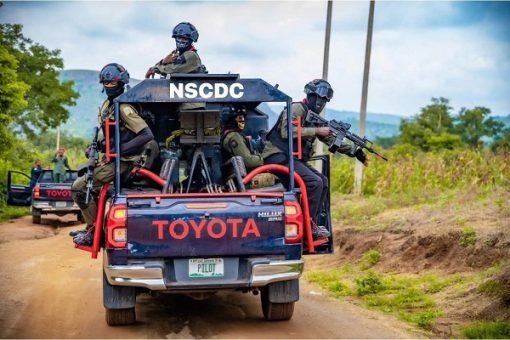
Image Credit:: The Nation
2. Coordination Breakdown
The statement mentions that construction companies should first “consult with telecom companies” and check “fibre routes.” This is true, but there is no centralised database, no clearance system, and no “call before you dig” line that functions.
Since day one, Rwanda has had these coordination systems. Kenya, notwithstanding its troubles, has institutional frameworks for quick response.
3. Industry Organisation
Kenya’s TESPOK is able to publicly advocate for compensation and organise operators. South Africa has created industry associations that collaborate with the state. Rwanda’s unified model incorporates all parties in the development process.
Nigeria’s telecom operators tend to work in isolation, lacking a single unified voice that is strong enough to bring about fundamental change.
4. Proactive vs. Reactive
Rwanda’s dual-deployment model and built-in redundancy help to circumvent many issues before they even happen. Kenya’s communication regulatory authority has protocols to quickly reroute traffic in the event of a disruption.
Nigeria is primarily reactive, giving warnings post-incident, rather than putting in place systems to avoid incidents altogether.
5. Documentation and Mapping
Construction companies in Nigeria often state that they were unaware of the existence of fibre cables in the sites they excavated. This demonstrates a basic absence of mapping and documentation of infrastructure.
Rwanda demands comprehensive documentation of cables that includes depth specifications. South Africa will not allow excavations without proof of the underlying infrastructure. These are not optional requests; they are regulatory mandates with enforcement mechanisms.
Related Story: WiFi, Woes, and Wallets: The Nigerian Techie in a Broken Economy
The Path Ahead for Nigeria
The NCC and NSCDC issued warnings. Warnings will not solve the problem. Nigeria needs:
Immediate Actions:
- Create a workable national fibre infrastructure and make it available to all construction firms and government agencies.
- Implement a 24-hour, 7-day per week hotline for the reporting of accidents and damages
- Build a system that requires the clearance of all fibre routes before excavation permits are even assigned.
- Begin the prosecution of offenders to create a precedent
Policy Recommendations:
- Create and mandate aerial-deployment standards to lessen reliance on underground cables.
- Improve the collaboration and integration of the NCC, state administrations, and local government officials.
- Develop frameworks for compensating businesses that are economically impacted by the outages.
Long-Term Plans:
- Construct a national fibre backbone and Rwanda-style redundancy.
- Create a real industry governing body.
- Make construction and fibre protection licensing requirements uniform across all government levels.
- Create and promote a public campaign to help those in Nigeria understand just how vital this infrastructure is.
Final Thoughts
Nigeria’s digital economy represents 14.4% of GDP and is set to grow rapidly because of the new Spectrum Roadmap 2025-2030. By 2030, Nigeria hopes to have its wireless capacity increased threefold and almost all Nigerians will have access to broadband. However, none of those grand plans will matter if the construction companies keep severing the cables that carry our internet.
Kenya shows that even government conflicts can’t derail a system with strong institutions and clear enforcement. From South Africa, we see that legal frameworks can help allocate responsibility. From Rwanda, we learn that, better than warnings, planning will keep problems at bay.
Nigeria has the policies. Nigeria has the laws. What Nigeria needs now is the political will to be able to act, not to issue warnings, and the institutional glue to make protection work in practice, not just in theory.
The question is no longer what to do. The question is, will Nigeria learn from its neighbours before the next cable gets severed?


I am passionate about crafting stories, vibing to good music (and making some too), debating Nigeria’s political future like it’s the World Cup, and finding the perfect quiet spot to work and unwind.




No Comments