

What the NCC’s New Plan Means for Your Internet and Phone Services
The telecoms regulator in Nigeria, NCC, has published a draft Spectrum Roadmap of 2025-2030 that has the potential to triple the wireless capacity of Nigeria and significantly speed up internet uptake in the country. This project is now open to project consultation. However, let’s break down this news. What does it mean, and how does it affect Nigerians?
What Is Spectrum Anyway?
Imagine the spectrum as a highway in the air that includes your phone calls, text messages, and internet data. These air highways can just be congested the same way physical roads do. The NCC has the task of controlling these highways–who is to use them, the amount of space on the highway, and the capacity to accommodate everybody.
As it stands today, Nigeria has allocated approximately 1.07 GHz of spectrum for mobile internet. NCC is also expected to increase this to 3 GHz by 2030, and this will allow us as a country to manage the internet explosion.
How Does This Affect You and Other Nigerians?
Faster Internet Everywhere: Current median speed: 20-40 Mbps. Target for 2030: 65-100 Mbps. It is quick enough to stream 4K video without buffers, even in remote locations.
Improved Rural Coverage: According to a recent report from PUNCH, 23 million Nigerians are “completely unconnected,” meaning they have no internet access. The plan focuses on increasing coverage to the underserved villages and communities that has more range.
More Affordable Data: Higher spectrum = higher capacity = reduced congestion = better prices could be offered by the operators. Spectrum pricing is also discussed in the roadmap in order to motivate rural investment.
The Big Four Goals
Bridge Digital Divide
Drive Investment
Improve Quality
Enable Innovation
Nigeria’s Data Explosion
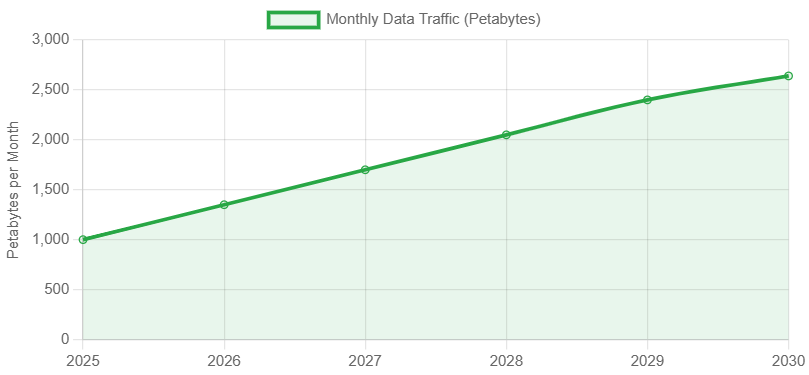
Nigerians are increasingly consuming data annually. Networks will be extremely congested without additional spectrum.
The Roadmap Timeline
2025-2026 (Short Term)
- Allocate 600 MHz rural broadband.
- Carry out a spectrum audit to determine unused frequency.
- Introduce a spectrum licensing system online.
- Enable WiFi 6 in the 6 GHz band
2027-2028 (Medium Term)
- Implement dynamic spectrum sharing
- Mid-term roadmap review
- Prepare for World Radio Conference 2027
2029-2030 (Long Term)
- Conduct new spectrum auctions
- Update the spectrum outlook beyond 2030
- Implement adaptive frameworks for emerging tech
Key Targets for 2030
The Satellite Game-Changer
The roadmap embraces satellite Direct-to-Device (D2D) technology—think Starlink connecting directly to your regular smartphone. This could provide backup connectivity during network outages and reach the most remote communities where building cell towers isn’t economical.
What Happens Next?
This is a draft document. The NCC interviewed 40 stakeholders (60% of those who were questioned responded) and consulted with the consultative forums. Now it is consulting wider public opinion before the plan is finalised.
Final Thoughts
When properly implemented, this spectrum roadmap puts Nigeria on the path to managing a 166 per cent growth in data traffic by 2030, attaining near-universal coverage of 4G connectivity, implementing 5G in all state capitals, and establishing Nigeria as an elite digital economy in Africa. The telecom sector already adds 14.4% to GDP, and with better spectrum management, it could result in significant growth as well as making the internet cheaper and accessible to all Nigerians. According to the NCC, consultation has been opened to the public since January 12th.


I am passionate about crafting stories, vibing to good music (and making some too), debating Nigeria’s political future like it’s the World Cup, and finding the perfect quiet spot to work and unwind.




No Comments