

Alice* is a data analyst based in Osogbo, Osun State. “Yes, I live in Osogbo full time, I have never lived in Lagos, and I have no plans to move there in the foreseeable future.” When I asked her how such a counterintuitive move has worked out so far for her, she replies: “I work remotely anyway and I earn in dollars, I have no reason at all to be in Lagos beyond attending events occasionally.” She concludes with a laugh: “Lagos is for warriors; me I am quite happy with my soft life here.”
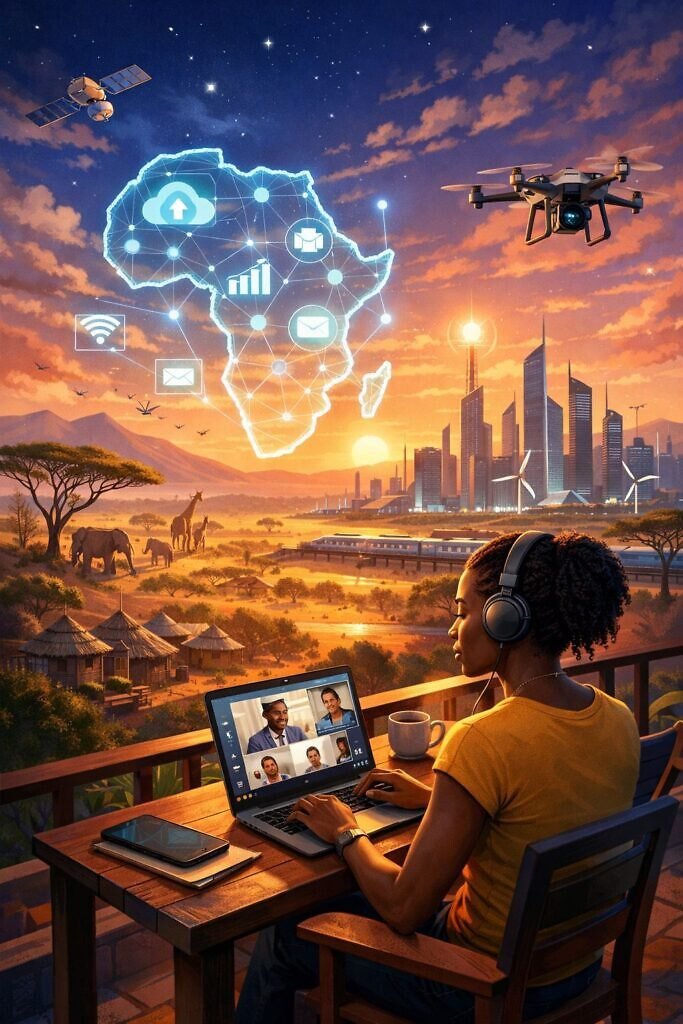
According to Google, one of the most searched for topics in 2025 by Nigerians in tech is “How to leverage digital and AI skills to get remote jobs.” For much of the Global South, remote work has been framed as salvation. A laptop, an internet connection, and suddenly a developer in Osogbo, Owerri or Lafia can earn in dollars, work for Silicon Valley companies, and bypass broken local systems. Nowadays, advances in Artificial Intelligence have made this easier and granted even more access to remote jobs from techies in the global south. Western platforms like Fiverr and Upwork, have promoted this narrative for years, local platforms like Ckrowd, Induege and Peepu are also among many other platforms that promise not just access to remote jobs but the skill and training to be qualified for them.
In September this year, the President of the United States of America, Donald Trump signed an executive order that will charge a $100,000 fee for applicants to the H1-B visa program for skilled foreign professionals, similarly among the global north, governments are focusing on harsher immigration regimes. Experts believe that this will drive a lot more skilled professionals to remote work in 2026. Furthermore there has been an increased demand for techies in emerging markets in specialized careers in tech such as digital marketing, cybersecurity and data analysis, and this demand should lead to job growth for remote workers .
For many techies and people who are seeking remote tech jobs, news like this call for celebration but while we roll out the drums and the drinks and celebrate being able to bypass Nigeria’s “innovation and wealth creation stifling environment” we need to have a more in-depth and honest conversation on the benefits of remote work versus in-person work, especially about the long-term implications of either for the Nigerian tech ecosystem.
Remote Work Solved the Access Problem—Not the Power Problem
Alice mentioned above, is evidence of what remote work has unlocked for the Nigerian techie. It has allowed talented professionals to escape naira instability, access better-paying roles without leaving Nigeria, compete in global labor markets on skill rather than passport, and participate in companies that would never have hired locally.
She says “If not for remote work, I would probably be among the people rushing from danfo to danfo or jumping from one uber to the other in Lagos, it might be boring here, but it is life on my own terms.”
Peter*, a Lagos based product manager shares his opinion: “Don’t get me wrong o! being well paid is sweet, but the other side of remote work the media does not often talk about is how as a remote worker you get the opportunity to work with better quality products, better tools, better processes, and exposure to world-class standards. Like, even you, you know you just have to up your game because you are dealing with people who know they are doing.”
However, I asked both Alice and Peter if they have a say in the decision making of the companies they work for, both of them were unanimous in their replies. “What is my business with decisions? The client pays me, I get the job done, the client is happy and I move on to the next gig.”. Both of them might not see it but it is a problem. Remote workers are frequently outside the core decision-making loop. They execute, but they rarely shape strategy. They deliver, but they are less likely to be groomed for leadership. The glass ceiling is not always explicit—but it exists.

In 2026 Onsite Work Will Still Produce the Ecosystem Leaders
Across the global tech industry, leadership pipelines remain deeply physical, and with harsher immigration policies like Trump’s above, that is unlikely to change in the foreseeable future
Senior engineers, product leads, engineering managers, and executives will still be based in headquarters, visible in meetings, present in informal conversations, and personally known by decision-makers. So for you as Global South professional who remains permanently remote, the risk is clear: you become excellent at delivery but invisible in succession planning.
Onsite work—especially in growing local tech ecosystems—offers something remote roles struggle to provide: context. When you are present in the office, you get to see how decisions are made, how trade-offs are negotiated, and how power flows through an organization.
The Hidden Cost of Remote Work: Commoditization of Global South Talent
Remote work has also introduced an uncomfortable dynamic: price-based competition.
When companies hire globally but retain centralized leadership, talent from the Global South risks being reduced to cost savings, execution capacity, and replaceable resources.
Onsite work—particularly within local companies—pushes against this trend. It creates ecosystems where talent is not just consumed but developed, retained, and empowered.
Building Ecosystems Requires Physical Presence
Tech ecosystems are not built on GitHub commits alone. They are built through mentorship, startup communities, universities, and early-stage companies experimenting and failing together. The danger of the prevalence of remote work for our tech ecosystem in Nigeria and Africa in general is that we are creating a culture of worker bees and drones rather than leaders and builders, and when our best talents, who are supposed to be building local solutions, are fully absorbed into remote roles for foreign companies, local ecosystems can stagnate.
The False Binary Hurts Young Tech Professionals
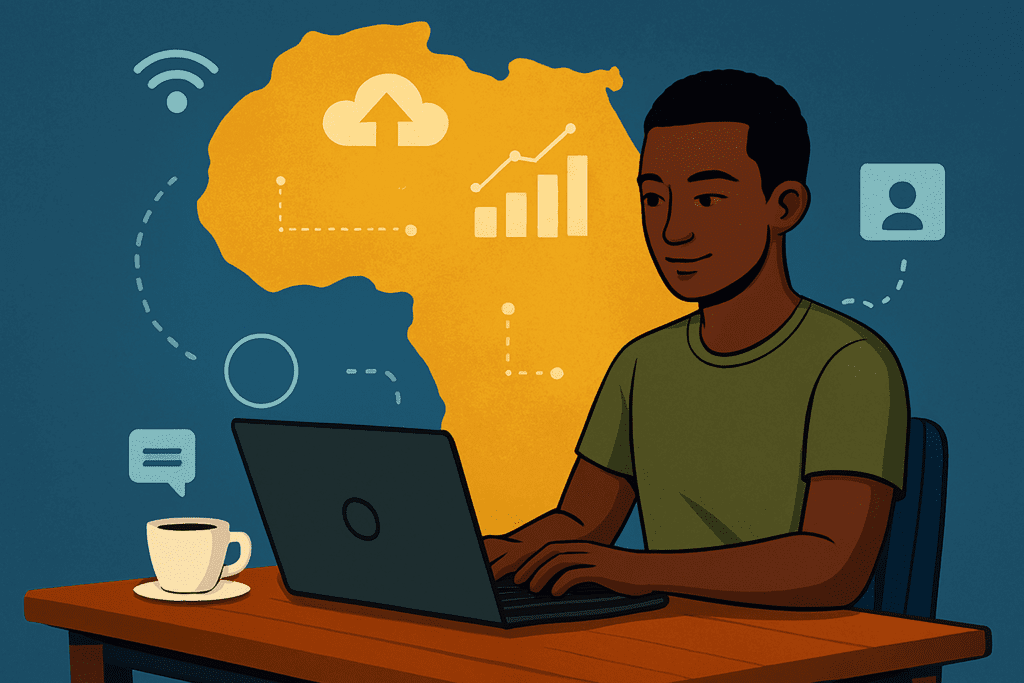
Of course, so far this article has sounded like an appeal to pity the “poor Nigerian tech ecosystem,” but beyond the moral debate. Choosing remote work versus onsite work is a career-stage decision.
For an early-career professionals remote work is sweet, you get to make cool money and benefit from onsite roles that accelerate learning and mentorship. But as you enter mid-level to Senior level as a techie, your career progression is no longer just about how good you are at executing tasks, it will depend on how you can maintain visibility and influence. If you are not in the room, you are going to be excluded
The hard truth is that as attractive as it may look, remote work is not for everybody, and we cannot build a proper tech ecosystem when everybody is behind a computer. Ecosystems get strengthened in rooms where everybody shows up and is seen
What Governments, Companies, and Professionals Can Do
If the main reason that Nigerian tech professionals prefer remote work with foreign companies is because the government has not invested in the ecosystem, then it goes without saying that Governments at various levels must invest in tech infrastructure and local ecosystems. Companies must start to build leadership pathways and create more empowerment for tech professionals. Professionals, on the other hand, must think beyond immediate paychecks.
The Future Is Hybrid—If We Design It Well
As for me, compelling evidence makes me err on the side that hybrid work, rather than remote work is the future of the tech ecosystem. As we enter 2026, Remote work should be a bridge, not a ceiling. Onsite work should be a foundation, not a constraint. In 2026, the world of tech will be as it always is. Access will open the door. Presence will still determine who owns the building.
*Not their real names






No Comments