


The Nigerian tech ecosystem was thrown into a frenzy when news of Ezra Olubi’s suspension from Paystack hit the airwaves last month. One week later, Ezra broke the news in his personal blog that he had been fired, allegedly before an independent investigation had been concluded. What started as a social media revelation of old tweets from 2009-2013 had snowballed into a full blown crisis in no time at all.
Olubi called the process unfair, saying his legal team would review it. Paystack insisted that its ex-cofounder’s dismissal was about reputational damage, not the tweets per se. There may be more to come from that episode as Paystack continues its independent investigation and Ezra prepares for legal fireworks. But while things seem to have cooled off, here are three expensive lessons we can pick up from the Ezra Olubi saga.
1. Your 2011 Tweets Can Still Fire You in 2025

The screenshot culture has become a prominent part of internet behavior, especially on X, formerly known as Twitter. So when Ezra’s former tweets became the focus of attention on X, many knew it would cost him more than he bargained for with Paystack. Some argued that the tweets had been made for over a decade and couldn’t be used as a judge of Ezra’s character. That sounds logical, but it’s not how long those posts have been made, it’s what their interpretations are and what that could do to your reputation.
Tweeting is easy, but the consequences for putting your thoughts on the microblogging site may be more complicated. What you are thinking is a cruise or humorous content could become marked ‘exhibition A’ in a termination case ten years from now.
2. Deleting the Account Is Not Deleting the Accountability
Ezra Olubi deactivated his X account within hours of the storm breaking on November 13. It changed nothing. Within minutes, screenshots were flying around, probably already saved to certain drives as you read this.
In 2025 Nigeria, deleting the account is the new “I have nothing to hide” red flag. It signals panic without erasing evidence. The brutal lesson remains this: the internet never forgets, and Nigerian Twitter never forgives.
3. Came Back From the Future to Tell You This: Don’t Make That Post!
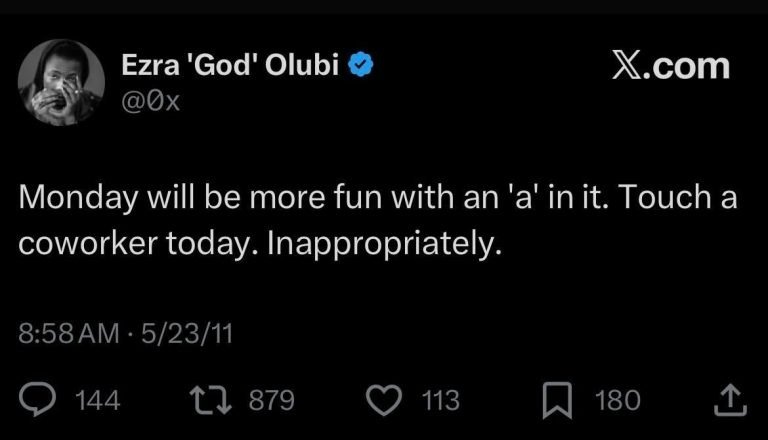
If 2025-you would lose a board seat or funding round over a tweet, 2011-you shouldn’t hit send. Certain tweeps made cogent arguments that Olubi’s posts were made in the “boys will be boys” era, and that it reflected a different time.
It’s unclear if that was ever a thing, but times and eras are not static. They evolve. Unlike times and eras, social media and screenshots have been designed to stick around for quite a while. They are not judges of character, but they can present your musings to those who will judge you.
For one, the lesson here is simple. You should not think certain things, but if you are deviant enough to think them, then you should think thrice about putting them on the internet. One tweet could cost you your reputation. Not tweeting sounds way easier, doesn’t it?
Conclusion
The Ezra Olubi saga must have felt like drama to a lot of people, but with deeper introspection, it could be a lot more than that. It is a mirror held up to every founder, CTO, and community manager in African tech.
In less than two weeks, a unicorn lost its public face, a brilliant engineer lost his job, and an entire generation of leaders quietly opened their old accounts and felt their stomachs drop.
The internet has gone from being just a playground to a permanent record that can outlive jokes, eras, and even apologies. A single screenshot can travel across timelines , across geographical barriers from Lekki to London before you can even have breakfast. In such a terrain, the only real protection you can deploy is foresight.
Post like your future board seat depends on it—because it does.
