

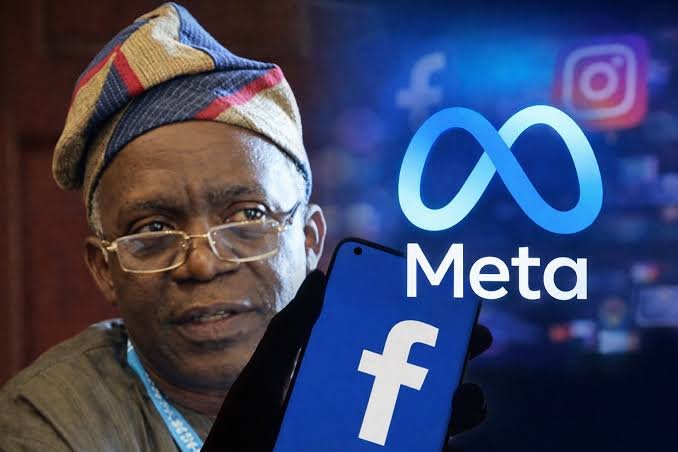

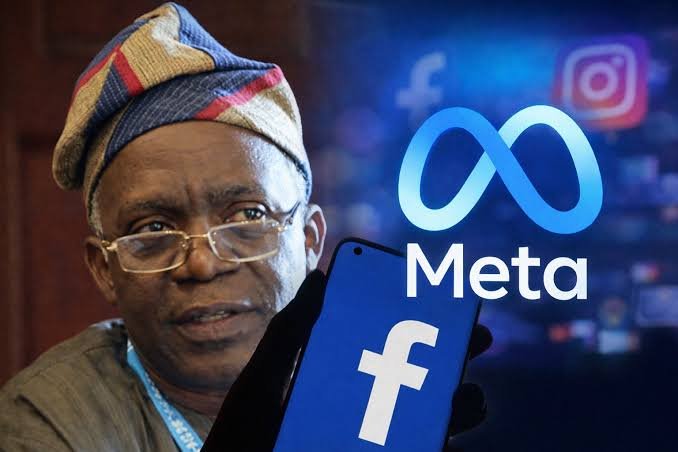
On Tuesday, the 13th January 2026, a Lagos State High Court sitting at Tafawa Balewa Square, Lagos, delivered a judgment that could be a landmark ruling in for privacy and data protection law in Nigeria. The court ordered multinational tech company Meta Platforms Inc to pay US$25,000 in damages to renowned human rights lawyer, Mr. Femi Falana (SAN), due to a false video published on one of Meta’s owned platforms, Facebook, claiming he (Falana) was suffering from a terminal illness. Falana was suing Meta Platforms Inc. on the basis that they breached section 24 of the Nigerian Data Protection Act 2023 in violation of his right to privacy by allowing the publication and circulation of the fake post.
While the monetary award was significantly lower than the US$5 million that Falana wanted, the implications of the ruling extend far beyond the sum. Chidinma Ikechukwu, a Legal Advisor, confirms. “At its core, the case represents a growing judicial willingness to confront Big Tech, hold tech platforms accountable for what they share, and enforce Nigeria’s evolving digital rights and cybersecurity framework.
A report by Statista puts Nigeria’s social media population at between 38 and 39 million people, which is around 16.4% of the total population. With that level of proliferation, social media platforms are increasingly shaping public opinion, reputations, and even political outcomes. The Falana–Meta judgment does become a lot more significant as it signals a critical message: the digital public square is not outside the reach of Nigerian law. When one considers that for so long cybersecurity professionals and aware citizens have expressed fears that Nigeria has not shown an ability to enforce laws that protect the data of its citizens especially for the Big Tech platforms such as Meta, it is a step in ensuring that as Ikechukwu adds: “it proves that the NDPRA 2023 has teeth and that global tech giants must respect local privacy standards.”
A Turning Point for Platform Accountability
According to Olumide Babalola, counsel to Femi Falana in the case, One of the most significant aspects of the judgment is the court’s rejection of the long‑standing argument that social media companies have always made in cases like this, that they are merely neutral platforms who should not be liable for user‑generated content. Babalola believes that Justice Oresanya’s ruling that Meta could not distance itself from liability when it actively benefits from content distribution through advertising, data harvesting, and algorithmic amplification will go a long way in strengthening the capacity of the NDPRA 2023 in protecting Nigerians.
According to Lawyard.org, an online legal media and services platform that offers opinions from legal experts across the country on landmark cases, what makes Meta even more culpable in Falana’s case is that the false video was not simply hosted; it was circulated within an ecosystem designed to reward sensational and emotionally charged material. In other words, even if Meta’s argument that they were not responsible for posting the video and merely hosted it were to be admissible in court, the fact that the company designed Facebook’s algorithm to circulate posts of public figures like Falana to a wide audience makes joint data controllers with page owners and discredits any claims of neutrality it may have in the case.
For Lawyard, this interpretation of the law aligns Nigerian jurisprudence with a growing global trend of lawmaking that seeks to hold technology platforms accountable not just for hosting content, but for shaping the information environment itself.
Privacy Rights in the Digital Age
Central to Falana’s claim was the violation of his constitutional right to privacy, as guaranteed under Section 37 of the 1999 Constitution of the Federal Republic of Nigeria. The court further relied on provisions of the Nigeria Data Protection Act 2023, which classifies health information as sensitive personal data deserving of enhanced protection.
Olumide Babalola further adds that the judgment has further made it clear that the publication of false medical information constitutes a serious intrusion into personal dignity, regardless of whether the affected individual is a public figure. By affirming that public prominence does not extinguish privacy rights, the court has strengthened protections for journalists, activists, politicians, and private citizens alike. This is particularly significant in Nigeria’s digital ecosystem, where misinformation involving fabricated illnesses, deaths, or scandals is often deployed for clickbait, political manipulation, or financial scams. The ruling sends a warning that such practices carry legal consequences not only for content creators but also for platforms that enable their spread.
The Legal Implications of the Ruling for Nigeria’s Digital Economy
According to Kingsley Chidume, a Lawyer and a Legal Regulatory Compliance Professional, beyond individual rights, the ruling has important implications for Nigeria’s broader digital economy. Nigeria is one of Meta’s largest markets in Africa, and millions of users rely on Facebook and Instagram for communication, commerce, and media consumption. He adds that by asserting jurisdiction over a multinational technology company, the Lagos High Court reaffirmed Nigeria’s authority to regulate digital activities that affect its citizens. This has potential consequences for how global platforms structure their compliance, risk management, and content moderation policies in the country.
Furthermore, the ruling also strengthens the hand of the Nigeria Data Protection Commission (NDPC), which has increasingly positioned itself as an active regulator rather than a symbolic institution. Judicial backing of the NDPA enhances its enforceability and may encourage more Nigerians to seek redress for digital rights violations.
Cybersecurity, Misinformation, and Digital Harm
Lawyard.org opines further: “Although the case was framed as a privacy dispute, it intersects directly with Nigeria’s cybersecurity challenges. False information, particularly when amplified at scale, represents a form of digital harm that can undermine trust, destabilise societies, and damage individual lives.”
From a cybersecurity perspective, the spread of misinformation reflects weaknesses in content verification systems, moderation workflows, and threat‑detection mechanisms. The court’s recognition of harm caused by false health claims implicitly acknowledges that cybersecurity is no longer limited to preventing hacking or data breaches; it also includes safeguarding information integrity.
The 2027 general elections are only months away now and the elections are a time when coordinated misinformation and disinformation campaigns tends to fracture the country’s unity. The Meta- Falana ruling can provide the courts and law enforcement the platform to define accountability standards for digital platforms operating within the country.
What the Judgment Means for Social Media Platforms
For social media companies, the Falana–Meta ruling raises the compliance bar. For a long time Big Tech has taken advantage of weak law enforcement to become information gods and share information that could have potentially damaging social and political consequences for the country. Now Platforms that operate in Nigeria can no longer rely solely on global policies that may not reflect local legal standards. Instead, they may be required to adopt Nigeria‑specific safeguards for sensitive data, faster response mechanisms for harmful content, and clearer accountability pathways.
Adebayo Durojaye, a cybersecurity analyst at TMAStreet points out that as courts increasingly scrutinise algorithmic amplification and monetisation models, platforms may face higher exposure to civil liability if they fail to demonstrate proactive harm‑prevention measures.
What It Means for Internet Users and Civil Society
For Nigerian Internet users, the ruling represents a validation of digital rights in practical terms. It confirms that individuals are not powerless against global corporations and that Nigerian courts are prepared to enforce constitutional and statutory protections in the digital space.
For civil society and human rights advocates, the judgment provides a legal foundation for future litigation on issues ranging from data misuse to online harassment and disinformation. It may also encourage strategic litigation as a tool for shaping platform behaviour.
A Signal Moment for Nigerian Digital Law
Ultimately in the words of Olumide Babalola, the victory for his client in the Falana–Meta case is less about the damages awarded and more about the precedent established. It signals a maturation of Nigeria’s digital legal framework and a willingness by the judiciary to adapt traditional legal principles to modern technological realities.
As Nigeria continues to position itself as a major digital economy in Africa, the ruling sends a clear message to technology companies, whether local or multinational, operating in Nigeria means respecting Nigerian law, Nigerian rights, and Nigerian courts. In that sense, the judgment stands as a defining moment in the country’s ongoing effort to balance innovation, free expression, privacy, and accountability in the digital age.
