


When news broke that Terra, a Nigerian drone manufacturing and defense technology startup, had secured funding to the tune of $11.5m from 8VC a VC firm led by Palantir co-founder, Joe Lonsdale, reactions across the African tech ecosystem were swift—and deeply divided.

On the surface, this is a milestone worth celebrating. A Nigerian hardware startup building advanced drone technology has attracted capital from one of Silicon Valley’s most powerful and influential technology companies. For founders, investors, and policymakers who have long argued that African startups need to move beyond fintech, and social impact startups and attract serious deep-tech capital, Terra’s funding appears to validate that thesis. As Stephen Deng, co-Founder at DSF Labs and one of the early backers of Terra, puts it: “Africa is exiting an African ecosystem driven solely by the promise of population growth and externally defined social impact into one where the continent must justify its competitiveness in the AI era.” Tony Lawson, Founder and Editorial Director at Shoppe Black adds: “It is a signal of a potential shift away from reliance on imported platforms towards domestically built systems designed for local threat profiles, regulatory realities and operational conditions.” Iyinoluwa Aboyeji describes it as: “A signal. Something has shifted , a new door has opened over Nigeria’s digital economy and those who are paying attention will sense it too.”
It is not that the event is not worthy of celebration, it is that at the risk of looking a gift horse in the mouth, the fund and the nature of the funder demands are more critical analysis. Joe Lonsdale is not as neutral a party as he may seem, (he has his own share of controversial statements and actions) and so there are unsettling questions about security, sovereignty, and the growing entanglement between African innovation and global power politics.
Both readings are correct. And that is precisely what makes the Terra–8VC deal such an important moment—not just for one startup, but for the future trajectory of African technology.
A Milestone for Nigerian Innovation
For years, African founders have argued that the continent’s startup ecosystem has been narrowly defined by fintech, consumer apps, and impact-driven software solutions.
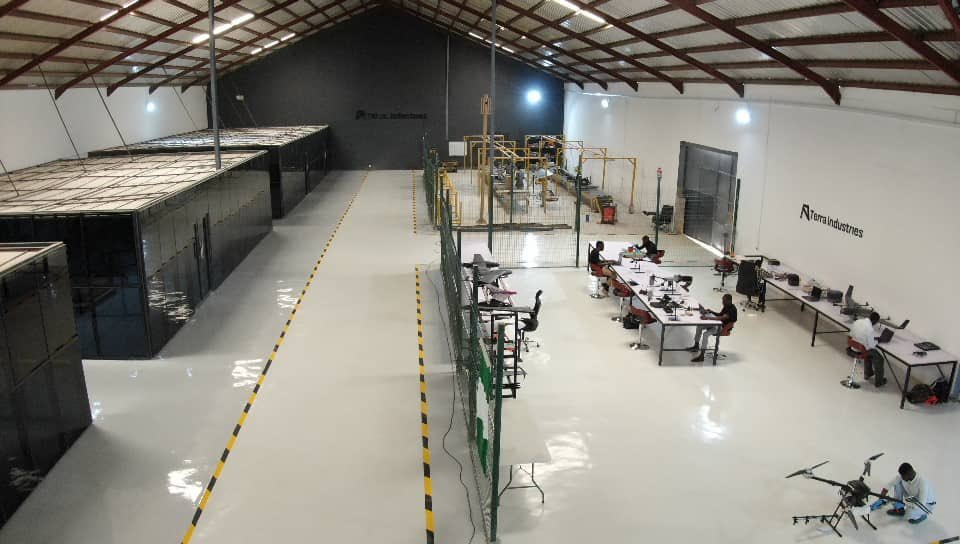
As a drone manufacturer, Terra operates at the intersection of aerospace engineering, artificial intelligence, logistics, agriculture, climate monitoring, and security infrastructure. Its ability to attract 8VC’s backing signals that African startups are no longer being viewed solely as vehicles for market access, but as builders of strategically relevant technology.
As Omoleye Omoruyi, Tech Journalist opines “This raise is different because Terra is building hardware not software… they are in defense and security. The sector most African VCs avoid because of long contract cycles and government procurement.”
For Nigeria’s tech ecosystem, the implications are significant. The deal suggests that global investors are increasingly willing to place long-term bets on African technical talent, original R&D, and industrial capacity—not just rapid user growth or financial inclusion metrics.
In that sense, Terra’s funding is a genuine win. It expands the imagination of what African startups can build and who is willing to fund them. Or again to quote Omoruyi “the bet from Silicon Valley raises questions about what opportunities are being missed closer to home”
But as much as this move calls for celebration, it is worth noting that VC8 is far from being a neutral party. In addition to Joe Lonsdale, Alex Moore who will now join the board of Terra as a director, is also a board member at Palantir.
For those not paying attention, Palantir is a company whose identity is deeply tied to intelligence agencies, defense establishments, and state power. Founded with early backing linked to the CIA, Palantir’s software platforms are widely used by Western governments for surveillance, intelligence analysis, and battlefield decision-making. Its technology has reportedly played roles in conflict zones such as Ukraine and Gaza, it is allegedly heavily funded by Israel, and its founders have become known for controversial political statements that blur the line between technology entrepreneurship and ideological advocacy.
Not long ago U.S. President Donald Trump declared Nigeria as a “country of particular concern” and declared that the American government would be making a series of military moves against the terrorists in the country. The declaration was followed by a missile strike that hit a terrorist hideout is Sokoto not long after. The fact that a company which its head honchos have close ties with the US government and have been alleged to be involved in some of its unsavory actions, investing in a Nigerian drone company soon after said US government literally declared the West African region as a theatre of war is far from being just happenstance.
When African startups accept capital from firms embedded in the global military-industrial and intelligence complex, the implications extend far beyond valuation and runway. Capital brings relationships, expectations, and influence, sometimes subtle, sometimes explicit.
Critics of the Terra deal point to several unanswered questions:
- Data governance: Who owns the data generated by Terra’s drones and towers? Where is it stored, and under what jurisdiction?
- Strategic influence: Could investors exert pressure over product direction, partnerships, or deployment decisions?
- Future use cases: Terra’s CEO Nathan Nwachukwu has argued that the current applications of the company’s products are civilian, but the question that should be asked is are there any safeguards that exist against militarization or misuse?
At the risk of sounding like a paranoid conspiracy theorist, it is worthy of note that Across Africa, historical experience has shown how infrastructure, extractive industries, and even digital platforms can become instruments of external power when governance frameworks are weak. And it would the be the height of naivete to believe that 8VC’s involvement with Palantir’s is not cause for alarm given the Palantir’s track record and positioning in global geopolitics, and its involvement with figures like Elon Musk who has lately being expressing some unpleasant thoughts about Africa
As investment professional Chioma Okereke points out, this raise by Terra suggests “more institutional and , foreign capital and participation in hardware tech.” Therefore, as African startups move into strategic sectors—AI, drones, data infrastructure, climate tech—they will attract investors whose interests are not purely commercial. These investors see technology as leverage: economic, political, and sometimes military. This mirrors patterns seen in Israel, Eastern Europe, and parts of Asia, where startups became extensions of national and geopolitical strategy. We must therefore start to think more deeply about how African governments can develop the regulatory maturity and policy coherence to manage these dynamics effectively. It is not a pleasant conversation, but the truth is that without clear national strategies on dual-use technologies, data sovereignty, and foreign strategic investment, we are simply inviting bad faith actors to exploit us, if not now, down the line.
What Governments and Regulators Must Do
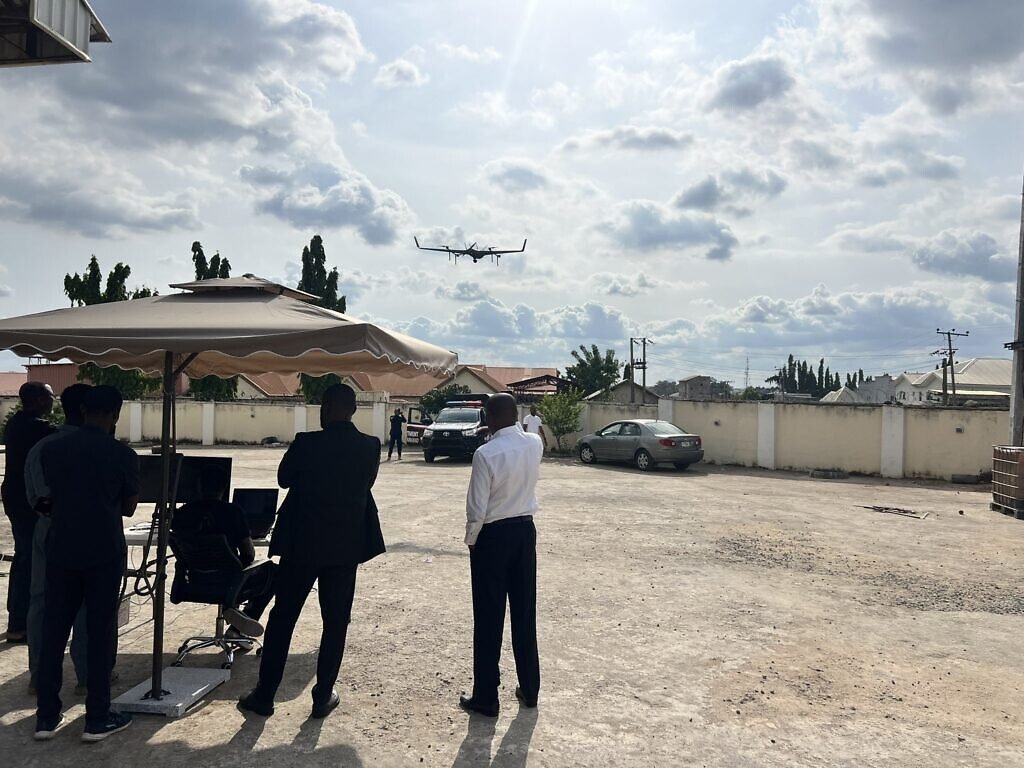
Does that mean this piece is saying foreign investment is bad, and Terra should not have taken the funding from 8VC? Or that VC8 necessarily has a sinister agenda with Terra? Of course not. It is too early to say, plus the foreign investment vs local investment ship sailed over a decade ago. Instead, what should happen is that the Terra deal should serve as a wake-up call for policymakers in Nigeria and across West Africa.
For ECDPM, a Brussels and Maastchrit based ThinkThank, African governments must take these three directions in cases like this:
- Regulatory clarity
Governments must develop frameworks that distinguish between civilian and military applications of emerging technologies, and clearly define acceptable use cases. - Data sovereignty protections
Robust rules around data ownership, storage, and access are no longer optional in a world of AI-powered hardware. - Founder preparedness
African founders need better education on the long-term implications of strategic capital—especially when investors are tied to state power.
If African governments don’t don’t get these guardrails in, they are at risk of leaving individual startups to navigate geopolitical complexity alone.
A Test Case for the Continent

As Marina Krynzhina, contributor at Valdai Club argues, Terra, is the latest African tech company that has been “given the opportunity to demonstrate that African startups can engage powerful global partners without surrendering autonomy or public trust.” Transparency, clear communication, and strong governance will matter as much as engineering excellence. For the ecosystem, the lesson is broader. The question is no longer whether African startups can attract global capital—but what kind of capital they are prepared to accept, and on what terms.
Beyond Drones, 8VC and Palantir
In the end, this story is not really about drones. Nor is it solely about whatever agenda VC8, Lonsdale, or Palantir may or may not have in West Africa. It is about Africa’s position in a rapidly fragmenting global order, where technology is power and capital is never neutral. As African innovation becomes more sophisticated, it will inevitably intersect with geopolitics. The challenge is to ensure that this intersection strengthens local capacity rather than reproducing old dependencies. What Africa sees in it, and how it responds, may shape the next decade of its tech future.






No Comments