


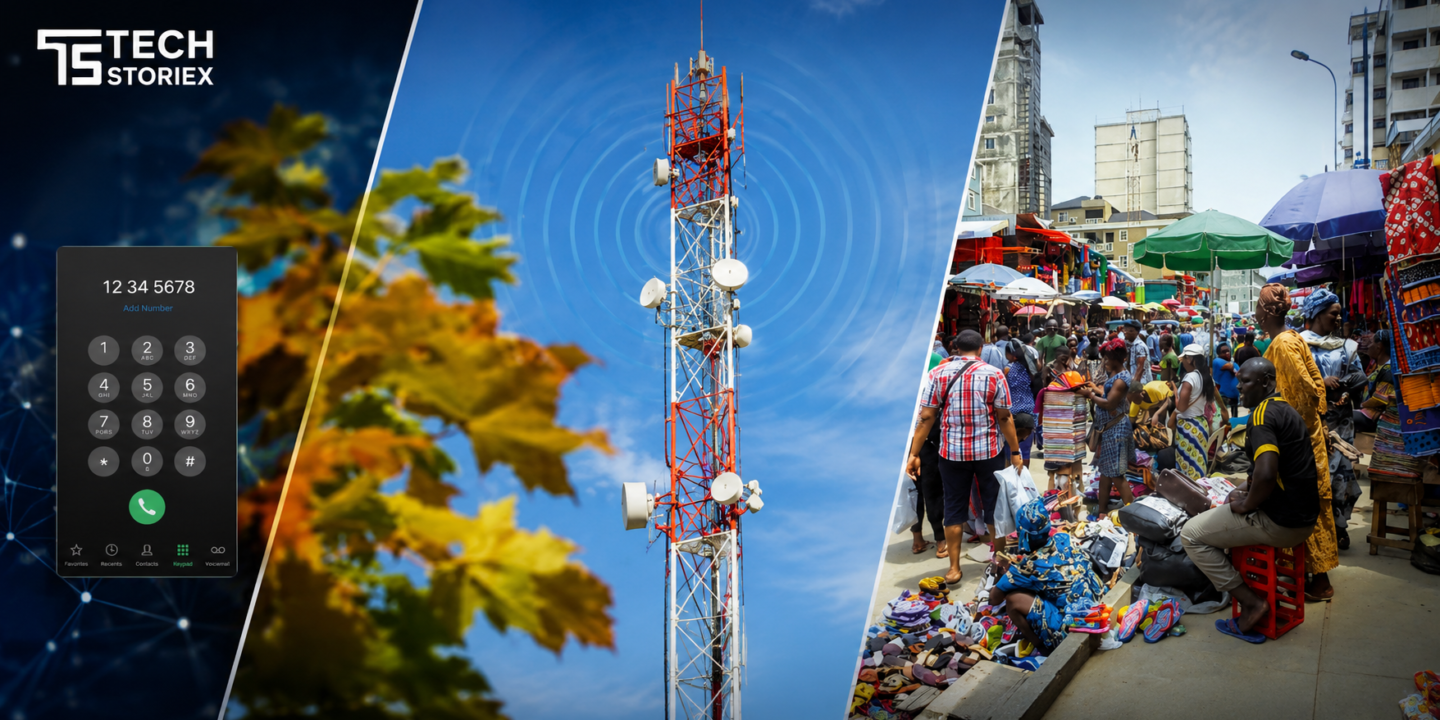
A regulatory dispute over who controls Nigeria’s ₦300 billion airtime lending market has dragged on for over six weeks. In that time, the agency meant to protect consumers shifted its justification three times. The consumers it was protecting are still waiting.
Walk through any market in Aba, any motorcycle or taxi rank in Enugu, any staff room in a Kaduna secondary school, and you will find the same small, unglamorous habit repeating itself across millions of lives: when the airtime finishes, you borrow. A few naira’s worth of credit, paid back on the next recharge, is often the difference between closing a sale and losing it, taking a fare and missing it, seeing an announcement and being left out of it entirely.
For more than six weeks, for tens of millions of Nigerians on one of the country’s largest telecom networks, that quiet safety net simply wasn’t there.
This is not a story about people who follow regulatory filings or court injunctions. It is a story about people who only notice policy when something they relied on stops working. The trader who can no longer call her supplier mid-transaction, the rider who loses a job because a customer’s call never reached him and the teacher who misses a meeting announced on a platform she can no longer afford to access. None of them asked to be at the centre of a dispute about foreign monopolies and economic sovereignty. All of them have spent the better part of two months absorbing the cost of one.
What stopped working was a financial service almost nobody in Nigeria’s policy conversation thought to defend until it was already gone: an informal credit system that the Association of Licensed Telecoms Operators estimates moves between ₦300 billion and ₦400 billion a year, built not on interest or collateral but on the simple trust that next month’s recharge will cover this month’s shortfall. It is, in practice, the most widely used credit product in the country. It is also, as of this year, the site of one of the strangest regulatory fights in Nigeria’s tech policy history, one in which the agency tasked with protecting consumers seems to have spent more energy changing its story than restoring their services.
A Reasonable Complaint, Aimed at the Wrong Target
The dispute begins, as these things often do, with a legitimate problem. Between 2021 and 2023, Nigeria’s Federal Competition and Consumer Protection Commission received over 11,000 complaints about predatory digital lending apps — platforms that mined borrowers’ phone contacts, sent threatening messages to family members, and charged extortionate interest on small loans. The FCCPC’s response, formalised in July 2025 as the Digital, Electronic, Online or Non-Traditional Consumer Lending Regulations, was a reasonable answer to a real crisis.
The trouble started when the commission decided this framework should also apply to airtime and data lending — a service with essentially nothing in common with the predatory apps the rules were built to stop. Airtime credit charges no interest. It uses no debt collectors. It does not access a borrower’s contact list or threaten anyone’s family. It is, structurally, a different product entirely, built and regulated for over a decade under the Nigerian Communications Commission, not the FCCPC.
The Wireless Application Service Providers Association of Nigeria, representing NCC-licensed members, said exactly this in court. In April 2026, the Federal High Court in Lagos agreed, granting an interim injunction restraining the FCCPC from enforcing its rules against WASPAN’s members. The FCCPC tried to have that injunction lifted. The court declined. Contempt proceedings were filed against the commission’s executive vice chairman, Tunji Bello.
By May 22, the FCCPC suspended enforcement altogether, citing the court’s order. Two of the country’s major networks restored their airtime lending services within days. The market, briefly, seemed to be healing.
The country’s largest network did not follow. Its subscribers, more than 92 million of them, were left waiting. Many are still waiting.
The Story Changes
What happened next is the part of this saga that should trouble anyone who pays attention to how Nigerian institutions explain themselves.
In early June 2026, a wave of coordinated reports landed across several national outlets carrying a claim attributed to the Presidency: that President Bola Tinubu had personally directed the FCCPC to dismantle what was described as a twelve-year monopoly held by Optasia, a South African technology firm operating in Nigeria through its subsidiary, Nairtime Nigeria Limited. The reports claimed the President had been persuaded that Optasia’s dominance was costing Nigeria in capital flight and that nine Nigerian fintech firms were being lined up to take its place, unlocking a market some pegged at ₦3 trillion annually.
It was, on its face, a striking pivot. The justification for restructuring Nigeria’s airtime lending market had quietly shifted from consumers are being harmed to a foreign company is hoarding value that belongs to Nigerians. These are not the same arguments. The first is a regulatory case about predatory practices. The second is an economic nationalism case about who profits from a market. An agency can believe both, but it cannot use one to justify suspending a service and then, weeks later, justify the same posture with the other, not without inviting the obvious question: which one was ever true?
The FCCPC’s answer, when pressed, was to deny it had said any of it. The Commission’s Director of Corporate Affairs issued a statement distancing the agency from the claims entirely, insisting it had neither briefed the Presidency nor proposed onboarding new operators. The denial was picked up by the same news outlet that had run the original story. The commission that had reportedly told the presidency it was liberating a market from foreign control was now telling the public it had said no such thing.
Three justifications in three months — consumer protection, judicial compliance, economic nationalism — each abandoned for the next as soon as it stopped being useful, with no acknowledgement that the previous one had ever existed. Whatever the truth of the briefing, the pattern is its own kind of answer. An institution that keeps changing why it is doing something is, usually, an institution that has stopped being sure what it is actually trying to achieve or is no longer telling the public the real reason.
Who Actually Owns This Airtime Lending Market?
There is a version of this story where the economic nationalism argument is simply correct and worth taking seriously on its own terms. Optasia, formerly Channel VAS, has operated Nigeria’s airtime credit infrastructure for over a decade with what regulators describe as minimal local footprint — few Nigerian staff, no meaningful data-sharing with local credit bureaus, and according to the FCCPC’s internal case, limited reinvestment relative to the scale of value it extracts. If that account is accurate, the underlying grievance is not manufactured. Nigeria has a long, well-documented history of foreign infrastructure providers operating critical consumer-facing services with little obligation to the market that sustains them.
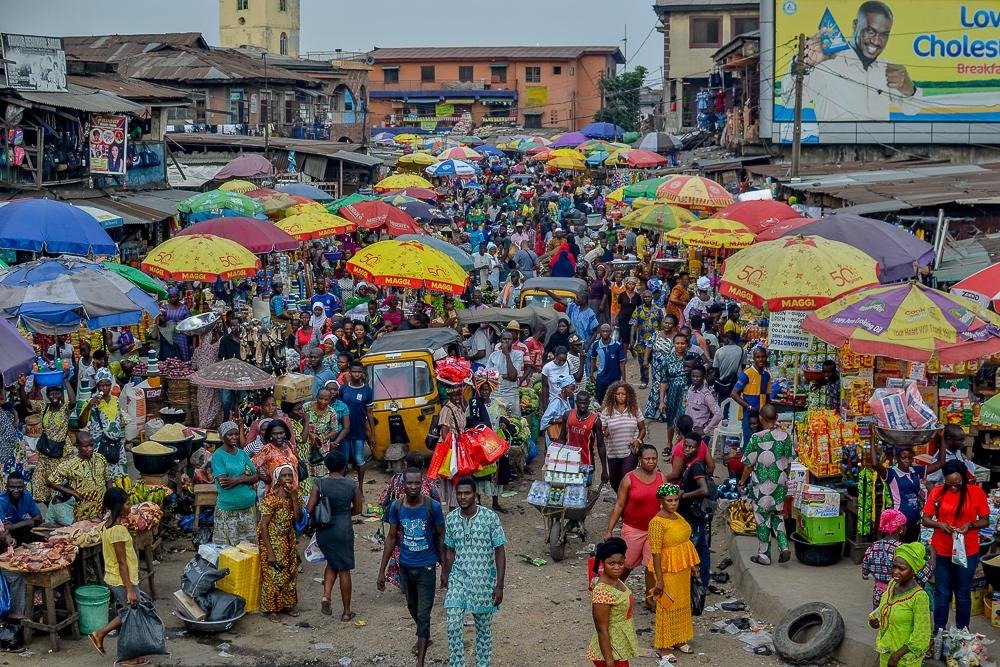
Mushin-Oyingbo Market, Lagos, Nigeria
In the real sense, a legitimate grievance does not excuse the method. If the goal was always to open the airtime credit market to local competition, the honest path was to say so from the outset, build the legal case for it, and execute a transition that didn’t leave tens of millions of people without a service they rely on daily for work, school, and emergencies. Instead, Nigerians got a consumer protection rationale that didn’t fit the product, a court injunction that exposed the rationale’s weakness, a suspension that should have ended the disruption, and a sudden, unexplained pivot to a different argument entirely, all while the actual disruption continued, unaddressed, for the people who had nothing to do with any of it.
What Six Weeks of Silence Costs
It is worth sitting with what “six weeks” means here, because regulatory timelines and human timelines move at entirely different speeds.
Picture the petty trader whose margins are counted in tens of naira, not thousands — for whom a borrowed unit of airtime is not a luxury but a basic tool of doing business, the thing that lets her confirm an order is still good before she packages it or chase a payment that’s running late. Take that away, and every transaction that used to take a phone call now takes a trip to buy a recharge card she may not have the spare cash for that day. Multiply her by the motorcycle riders who miss fares because a customer’s call never connects, the artisans who lose a day’s work coordinating a job over data they couldn’t borrow, the students and workers who depend on a borrowed gigabyte to submit an assignment or join a call before the connection runs out. None of these people have unpredictable incomes because they manage money badly. They have unpredictable incomes because Nigeria’s informal economy runs on exactly this kind of small, flexible credit — and for six weeks, a regulatory dispute switched that credit off without asking anyone who depended on it.
None of this shows up in a circular. None of it appears in the market share returns the CBN and FCCPC require operators to file. It shows up only in the texture of daily life for people whose financial margin is thin enough that a delayed phone call is a lost sale, and a missed message is a missed opportunity.
This is the quiet asymmetry at the centre of so much Nigerian tech regulation: the institutions involved operate in a register of market share percentages, capital flight estimates, and jurisdictional disputes, while the people affected operate in a register of whether they can call their supplier today. The FCCPC’s case, the Presidency’s alleged briefing, WASPAN’s lawsuit, Optasia’s defence — all of it is conducted almost entirely above the heads of the tens of millions of people whose daily routines it has disrupted. The most basic question any of them might ask is “Who is protecting me?” It has been more than six weeks into this; still not been answered by anyone with the authority to answer it.
What Should Happen Next?
The substantive court case is set for judgement on 20 July 2026. Whatever the ruling, three things would mark the difference between a regulator that has learned something and one that has simply moved on to its next dispute.
First, the FCCPC owes the public a single, consistent account of why this intervention happened — not a rotation of justifications deployed and abandoned as each one fails to hold up. If the real goal is breaking a foreign monopoly, say so, defend it on those terms, and let the public and the courts evaluate that case honestly.
Second, any transition away from Optasia’s infrastructure needs a continuity plan that does not repeat the last six weeks. Whatever replaces the current system must be live, tested, and functioning before the old one is switched off, not after, with millions of subscribers absorbing the gap.
Third, and most basically: a regulator does not get to invoke consumers as the reason for an intervention and then become unreachable to those same consumers once the intervention causes harm. If the FCCPC’s case against Optasia has merit, it can be made without leaving Nigeria’s traders, riders, and informal workers to absorb the cost of proving it.
Nigeria may well have a legitimate case for reclaiming a strategically important piece of its digital economy from a foreign monopoly. That case deserves to be heard on its own terms, argued honestly, from the start, by people willing to be held to it. What it does not deserve is to be smuggled in behind a consumer protection claim that didn’t survive contact with a courtroom, dressed up as economic nationalism only once the first story stopped working, while the people at the centre of both stories were never once asked what they needed.
