


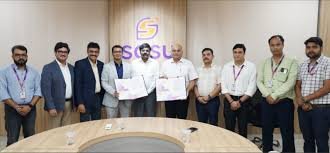
Nigeria’s tech ecosystem may be getting a timely boost as Aptech introduces a new AI degree programme built in partnership with India’s Scope Global Skills University. The plan offers a clear route for young Nigerians who want to study Artificial Intelligence and Machine Learning without paying the high cost usually tied to international degrees.
The programme runs for 36 months, yet its structure feels different from the traditional pathway. Students will begin their studies in Nigeria, where Aptech will train them in C, Java, Python, database systems and early AI-powered development tools. This period lasts 18 months. It gives learners the confidence to handle both coding logic and the basics of machine learning.
However, the journey doesn’t end there. After the first phase, students will travel to India to complete the final stretch at SGSU’s campus in Bhopal. Here, they will take on deep learning, computer vision, cross-platform applications and advanced analytics. Everything leads to a capstone project centred on solving a practical industry challenge.
Aptech’s Executive Vice President for International Business, Kallol Mukherjee, said the focus was on access and quality. “We’re offering Nigerian students a cost-effective route to a globally recognised degree without compromising quality,” he said. He added that the design aims to produce graduates who can work immediately. “The goal is to ensure graduates are employable from day one, not just educated, but ready.”
This announcement arrives as concerns grow about Nigeria’s widening skills gap in areas like AI engineering, full-stack development, and cloud technologies. Although fintech firms and data-driven companies are expanding, many still struggle to find specialised talent. Workforce development specialist Chinedu Okpara believes partnerships like this show that the country is finally adapting to global training trends. “The reality is that digital transformation is accelerating faster than traditional institutions can adapt,” he said. “Partnerships like this give students global experience while staying aligned with local industry needs.”
SGSU’s Vice Chancellor, Dr Vijay Singh, explained that the school is prepared for the first Nigerian cohort. He described the collaboration as a link between two rising digital economies. Graduates will earn an internationally recognised, UGC-approved degree, giving them a path to postgraduate opportunities and roles in AI and data sciences.
Admissions for the pioneer class have opened, and stakeholders see this as a strategic step toward building a workforce that can compete globally. Nigeria’s push for stronger AI education appears to be gaining structure, and this model may help close the gap faster than expected.
