

When I was writing this piece on how to build a scalable Minimum Viable Tech Product on a budget, I realized that the most common examples of the products that Nigerian tech startups used are foreign owned. And as another “Detty December” approaches, it is a stark reminder of the fact that we need homegrown tech platforms.
Every December, something extraordinary happens in Nigeria. Flights into Lagos, Abuja, and Port Harcourt are packed. Afrobeat playlists take over airports, clubs, and holiday homes from London to Houston. The world’s biggest artists, influencers, investors, and celebrities suddenly find a reason to be on Nigerian soil. It’s Detty December — our annual cultural homecoming, economic boom, and global spotlight fused into one.
Detty December has grown from a local party season into one of the most powerful soft-power engines on the African continent. In those four festive weeks, Nigeria becomes the cultural capital of the Black world. From Afro Nation to Flytime, from Omah Lay nights to small-town concerts, from suya stands to luxury restaurants, the country transforms into an economic theatre of possibilities. It is one of the few times when Nigeria’s brand is not just shining — it is leading.
But behind this vibrancy lies a critical truth: the cultural and financial value generated during Detty December is still leaking out of the country because we are not building enough homegrown technology to absorb, circulate, and multiply that value.
Adetutu Laditan, Principal strategist at Woof Studios mentions a well-known but depressing stat that players in the Nigerian tech ecosystem and the African creative industry all know, but like to look away from on Eche Emole and Chika Uwazie’s Afropolitan Podcast. “For every 1 million views on YouTube, an African creator makes $1000. For the same amount of views, an American makes $32500.” She further argues that for YouTube as well as other tech platforms, it is not a matter of discrimination. Africa simply does not provide the market share for the tech giants that advertise on these platforms to go higher on compensating our creators and professionals.
According to a report by Forbes Africa, in December 2024, Lagos State alone attracted an estimated 1.2 million tourists. Bringing about a surge in hotel bookings and short-let apartment rentals. December hotel revenue in Lagos hit N54 billion ($36 million) from 15,000 bookings. That is a sizable sum that could be making a solid impact in the Nigerian economy, but unfortunately the bulk of it will end up back in foreign pockets because while we are exporting culture, we importing the technology that monetizes it.
And that has to change.
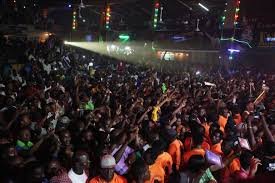
The World Comes for Our Culture — But Tech Determines Who Gets Paid
Culture is Nigeria’s greatest global export. Music, fashion, food, nightlife, film — we are shaping the world’s imagination. Every December, thousands come home or travel in for one reason: to experience this culture at full voltage.
But look closely at the economic pipeline behind these experiences:
- Flight bookings? Global platforms.
- Hotel reservations? Global platforms.
- Event ticketing? Mostly foreign-owned platforms.
- Ride-hailing? Foreign.
- Short-term rentals? Foreign.
- Payment processors? Largely foreign.
- Streaming and content platforms amplifying our artists? Foreign.
The world comes to Nigeria every December, but too much of the wealth leaves with them.
What should be a season of national economic retention is instead a season of capital export. Nigeria is effectively hosting a global cultural festival — but paying digital gate fees to foreign tech companies at every turn.
This is not how a country serious about development behaves.
Detty December Is Proof of Nigeria’s Market Power
Economists call it revealed preference: when people show you what they truly value by how they behave.
In Detty December:
- People are willing to pay premium prices for convenience and access.
- Businesses experience a once-in-a-year surge in traffic.
- Global investors quietly fly into Lagos to observe what they call “the Nigerian demand miracle.”
- International media turn Lagos into a headline city.
This period exposes truth tech founders often underestimate: Nigeria is a market that commands global attention and global spending power — even without functioning infrastructure.
Imagine the scale of opportunity if the tools enabling these experiences were locally owned, locally operated, and locally monetized.
Imagine if:
- Ticketing fees stayed in Nigeria.
- Creator earnings stayed in Nigeria.
- Booking commissions stayed in Nigeria.
- Event promotions, discovery apps, nightlife maps, and entertainment analytics platforms were Nigerian-built.
Detty December would become more than a cultural event — it would be a domestic economic engine.
The Problem: Culture Is Local, But Tech Is Foreign
Nigeria’s entertainment and nightlife ecosystem is powered by:
- Local creativity
- Local sweat
- Local logistics
- Local demand
- Local risk
But the digital infrastructure monetizing that ecosystem is almost entirely foreign.
That imbalance is why an artist can sell out multiple shows yet struggle to accurately track ticket data. It’s why promoters pay outrageous fees to foreign ticketing platforms. It’s why tourist spending gets routed through foreign fintech rails. It’s why content consumption on platforms like YouTube brings in pennies to Nigerian creators compared to creators in developed markets.
If there is anything we can learn from incidents such as Netflix exiting Nigeria sometime this year, and Ezra Olubi’s sacking by Paystack When a foreign technology platform controls the rails of commerce, marketing, entertainment, and data, they control the wealth and the future of the industry. And any Nigerian professional or creator on such platforms can be yanked off without warning and left without reprieve
Nigeria cannot continue being the talent while others are the tech.
A Country That Dominates Culture Must Also Dominate the Infrastructure Behind It
What Nigeria needs is simple:
Homegrown tech solutions that understand Nigerian realities and keep Nigerian wealth circulating within the Nigerian economy.
Imagine the following:
1. Nigerian standard ticketing platforms built for Nigerian event realities
Platforms that understand last-minute culture, unreliable internet, local pricing, payment flexibility, and fraud challenges — and build for them.
2. Nigerian travel and hospitality platforms optimized for diaspora homecoming
Mapping tools, curated experiences, local safety guides, and community-driven booking systems will make a lot of impact.
3. Nigerian content platforms that reward creators fairly
We should be looking at transparent payout systems pegged to local cost structures — not foreign exchange vulnerabilities.
4. Nigerian data analytics companies studying entertainment spending patterns
Providing insights for investors, promoters, city governments, and creators. It helps the various stakeholders to know where to concentrate their efforts.
5. Nigerian social networks amplifying nightlife, events, communities, and culture
Again, a lot of the Detty December content are going to end up on Instagram, TikTok and YouTube, and once again the creators are going to denied their deserved compensation because of foreign algorithmic chokeholds. For all that it is worth it is past time for social networks that allowing local creators and businesses to thrive without foreign interference
Each of these is not only possible — they are overdue.
If Nigeria Does Not Build Now, Others Will — And Then It Will Be Too Late
The global entertainment industry has taken notice of Detty December.
International corporations are already studying the boom:
- Venture capital firms are tracking Nigerian nightlife startups.
- Foreign entertainment platforms are designing new Africa-facing features.
- Global fintech companies are eyeing Detty December cross-border spend as a “growth category.”
If Nigeria does not build and scale its own solutions now, we will repeat the same pattern seen in other sectors:
- Nigerians create the culture.
- Foreign companies build the tech rails.
- Foreign companies extract the wealth.
And we remain spectators in our own economy.
The Call to Action: A Tech Renaissance Rooted in Culture
Nigeria’s tech ecosystem must stop building in isolation from the country’s largest economic engine: its culture.
Detty December is not just a party season — it is a multibillion-naira annual market hiding in plain sight. It is also an annual reminder that the world is willing to pay for Nigerian experiences.
What Nigeria needs now is for founders, investors, and policymakers to treat culture as infrastructure.
- Build tech that solves Nigerian problems.
- Build tech that integrates with the entertainment value chain.
- Build tech that captures the spending power of the diaspora.
- Build tech that keeps the data, profits, and IP within Nigeria.
Because if we can export culture, we can certainly build the technology that monetizes it.
A Final Reminder
Every December, when the planes land and the parties begin, Nigeria becomes the center of the world.
The question is: Will we continue giving away the economic value of that attention?
Or will we finally build the tech infrastructure that ensures that when the world comes to enjoy our culture, the wealth stays right here at home?
Nigeria has the talent.
Nigeria has the market.
Nigeria has the cultural gravity.
Now, it needs the technology.
And it needs it fast.
