

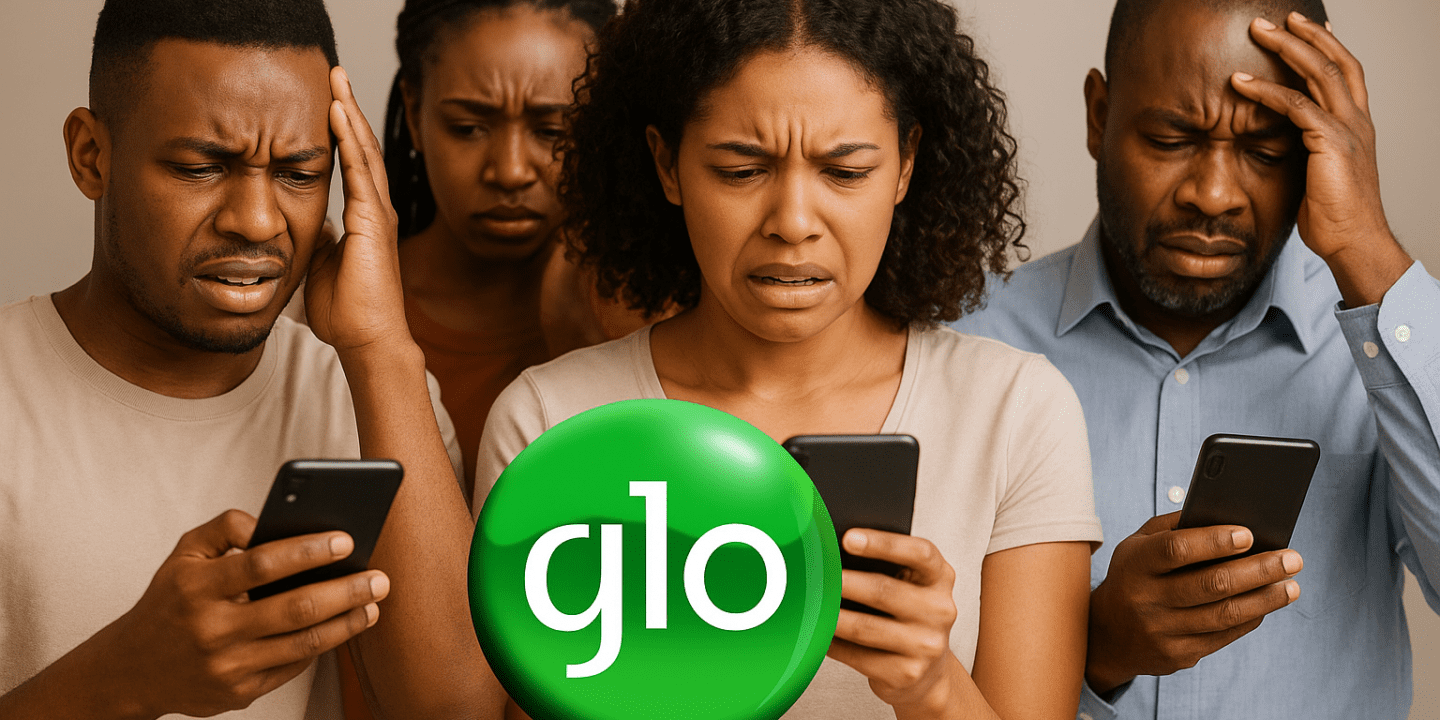
It had been a year of big hopes, the introduction of AI, government funding in the billions, and a big vision of a smarter Nigeria, and it was almost impossible to believe that a four-hour countrywide shutdown would put a stop to life altogether. However, Glo subscribers, millions of them, were thrown offline, stuck between 8:30 a.m. and 12:38 p.m. on Tuesday, once again reminding us of a very painful reality: in Big 2025, the giant of Africa still struggles.
Internet Reception Still a Big Problem in Big 2025
Millions of Nigerians now live with a simple survival hack: use two network providers—one as backup for the other. When one “misbehaves”, you switch. It has become a culture, almost a reflex, and yesterday proved exactly why.
Some recounted how the outage upended their plans.
“My sisters switched to their other number and had to buy expensive data because of this. They couldn’t make transfers… they were supposed to go to the market,” said businesswoman Abu Mercy.
A youth corper, Ezekiel, wasn’t so lucky: “I had to connect to someone’s MTN hotspot.”
Freelander Victor only realised when his phone’s news pop-up told him.
Eleojo, an academic researcher, said, “I had to borrow an ATM card. I want to migrate from Glo jare.”
Fresh graduate Finayon said he restarted his phone twice: “I thought my phone was spoilt.”
Across WhatsApp groups, timelines, and homes, the story was the same, confusion, frustration, and the expensive inconvenience of being forced into alternatives.
Glo Internet Was Out—but Only Glo Could Access the Internet. How?
Interestingly, while users were offline, Glo still managed to update them on social media—thanks to third-party connectivity at the backend. That contrast stung. Users asked: if the outage affected “all locations”, how was the company still online?
Glo, for its part, apologised quickly, reaffirmed its commitment to digital infrastructure, and announced full restoration after 4 hours and 8 minutes. But it never revealed the root cause.
This silence, common among telecom operators, feeds a bigger issue in Nigeria’s tech ecosystem: a culture where disruptions occur, users rage, providers apologise, and life moves on without clarity.
Why Outages Still Happen in 2025
Behind the scenes, the entire telecom sector is under immense pressure. Many issues reported this year alone by the telecommunications industry are on a long list.
Every day, there is a threat of diesel supply blockades, vandalised fibre lines, tower theft, black-market batteries, fibre cuts in the construction of roads and the increasing cost of maintaining the 42,000 base stations. Due to the inability of the national grid, operators use more than 40 million litres of diesel on a monthly basis and utilise more than 350 million annually to power towers.
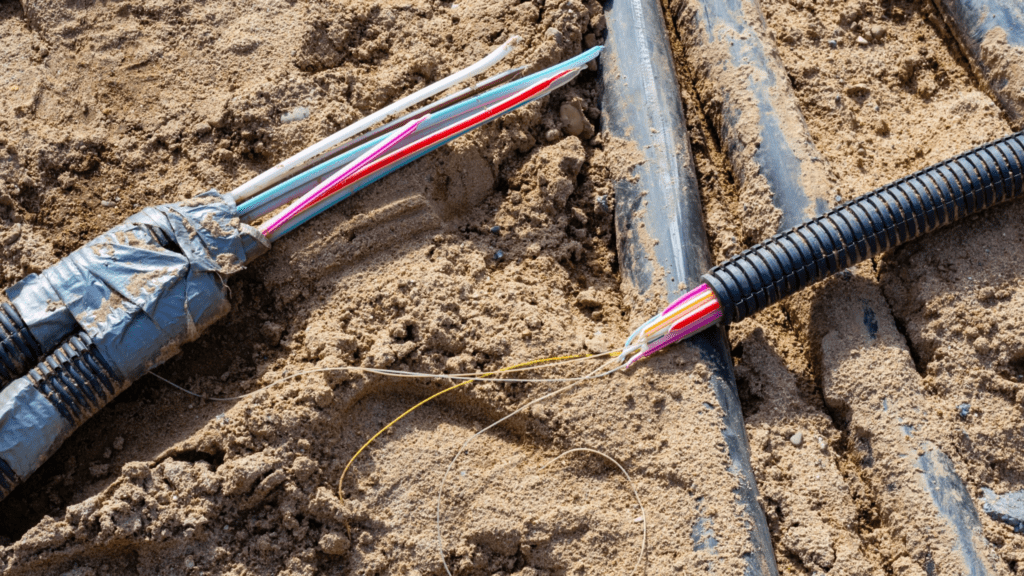
Image Credit: TechCabal
And when fibres are cut—whether by highway contractors or thieves—it takes only minutes for Nigerians to feel the ripple.
Even Glo itself has been relocating vandalised fibres, deploying thousands of 4G sites, expanding rural coverage, and switching many sites to hybrid solar systems. But the scale of the challenge remains enormous. Until when are we still going to grapple with these?
The intention to add 7,000 new towers and deploy 90,000km of fibre by 2025 is good news, however, it will not solve the years of wasted infrastructure in one Microsoft Excel spreadsheet. Where does the real problem lie?
The Question No One Wants to Ask Aloud
Why do Nigerians accept poor service as normal? In November, when Cloudflare went down globally, the cause was explained within hours. Engineers issued detailed reports. Root causes were shared. Users understood what happened and why.
But in Nigeria, outages come and go quietly. Providers rarely explain. Regulators move slowly. Users complain loudly online—but rarely demand accountability. So disruptions continue. The cycle repeats.
Looking Ahead: What Will Change in 2026?
As 2026 approaches, with grand ambitions for AI, innovation hubs, fibre expansion, and youth tech talent, the real question is simple: Will Nigerians still be switching SIM cards and hotspots just to remain online?
Will the business owner in Aba or the freelancer in Ikoyi finally enjoy stable connectivity?
When will the student, the trader, the startup founder, and the academicians stop living with the fear that “anything fit sup”?
Nigeria’s digital future is bright. But until infrastructure becomes reliable—and accountability becomes a norm—users will keep suffering moments like yesterday: four hours of silence, frustration, and a reminder that even in Big 2025, the basics still fail.

One reply on “4 Hours of Data Outage: How Glo Did Users ‘Detty’ in Big 2025”
I believe Glo should do better.
This is a creative write up👏👏👏