

There is a particular kind of betrayal that does not arrive loudly. It does not announce itself with a press release or a public falling out. It arrives quietly, in the form of an IPO filing that lists Citigroup, Deutsche Bank, and JPMorgan Chase as underwriters and says nothing about the Nigerian Stock Exchange. Opay is that actor.
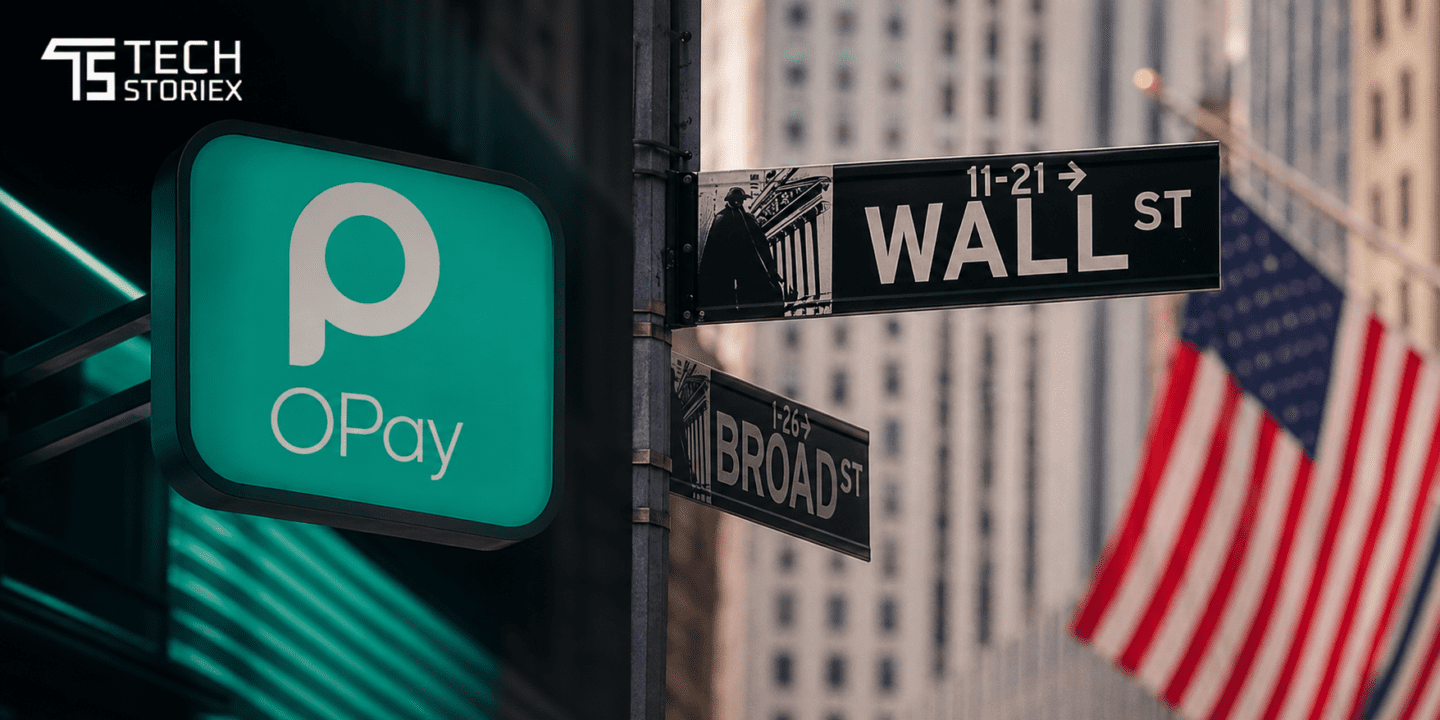
That is what happened on 1st May 2026, when Bloomberg reported that OPay Digital Services, the green-branded fintech that is now embedded into the daily financial lives of over 40 million Nigerians, is preparing to list on a US stock exchange at a targeted valuation of $4 billion. Wall Street’s top banks have been hired. The share sale could happen before the end of the year. And the market that built OPay into what it is today is not invited to own a single share of it.
This is not a small thing. This deserves to be said plainly and loudly.
How Nigeria Built OPay
OPay entered Nigeria in 2018, after Chinese billionaire Yahui Zhou, through his Opera Group, acquired what was then a modest mobile money platform called PayCom Nigeria Limited. What came next was a calculated and aggressive expansion into one of the world’s most financially underserved markets.
The strategy was smart. Nigeria had a massive unbanked population, a growing mobile penetration rate, and a traditional banking sector that consistently failed its customers. OPay saw the gap and filled it with an army of agents dressed in green, stationed at every bus stop, market, and street corner. They gave Nigerians something their banks could not: reliability.
By October 2023, OPay was the single most downloaded app in Nigeria across all categories, not just finance apps, but every app. Think about what that means. In a country of over 200 million people, where Nigerians have WhatsApp, Instagram, YouTube, and every major global platform on their phones, they downloaded OPay more than anything else.
That did not happen because of Chinese investment or SoftBank’s billions. It happened because ordinary Nigerians, traders, artisans, civil servants, students chose OPay when their banks let them down. When Nigeria’s 2023 cash crunch hit and bank ATMs ran dry, OPay’s agent network became a lifeline. The company reported a 40% spike in new registrations in a single quarter.
Mobile money operators, led largely by OPay and PalmPay, handled ₦41.5 trillion in transactions between January and July 2024 alone, up from just ₦1.37 trillion in the same period in 2020. Nigeria did not just adopt OPay. Nigeria turbocharged it.
From $0 to $4 Billion: Who Did the Work?
In 2021, OPay raised $400 million in a Series C round at a valuation of $2 billion. By the end of 2025, Opera’s 9.5% stake in the company implied a total valuation of approximately $3.1 billion. Today, the company is targeting $4 billion at IPO.
The question worth asking is, where did that value come from?
It came from the motorcycle rider in Ibadan who used ORide before the Lagos ban killed it. It came from the market woman in Onitsha whose customers stopped asking for bank transfers because OPay was faster. It came from the student in Abuja who discovered they could receive money from their parents in the village without owning a bank account. It came from millions of daily, ordinary, invisible transactions by people who never knew they were building a unicorn.
By early 2026, OPay had a 600,000-strong agent network and over 40 million registered users. That infrastructure, every single agent, every merchant terminal, every wallet balance, was built on Nigerian soil, with Nigerian trust, inside a Nigerian regulatory framework that the CBN granted the company access to. And now that the company is worth $4 billion, the beneficiaries of that listing will be shareholders on a US exchange.
Not Nigerians.
Why Wall Street and Not Lagos?
To be fair, this is not a decision made out of spite. It is made out of cold financial logic and that, in itself, is the problem.
Nigeria’s naira has lost 70% of its value since 2023. Even with the currency stabilising, naira revenue growing 50% year-on-year can still translate to flat or declining dollar-reported revenue. For a company preparing to present itself to global investors, that is a difficult conversation. A dual listing, US and NGX , would require disclosing naira-denominated financials that look uncomfortable when converted to dollars, even if the underlying business is thriving.
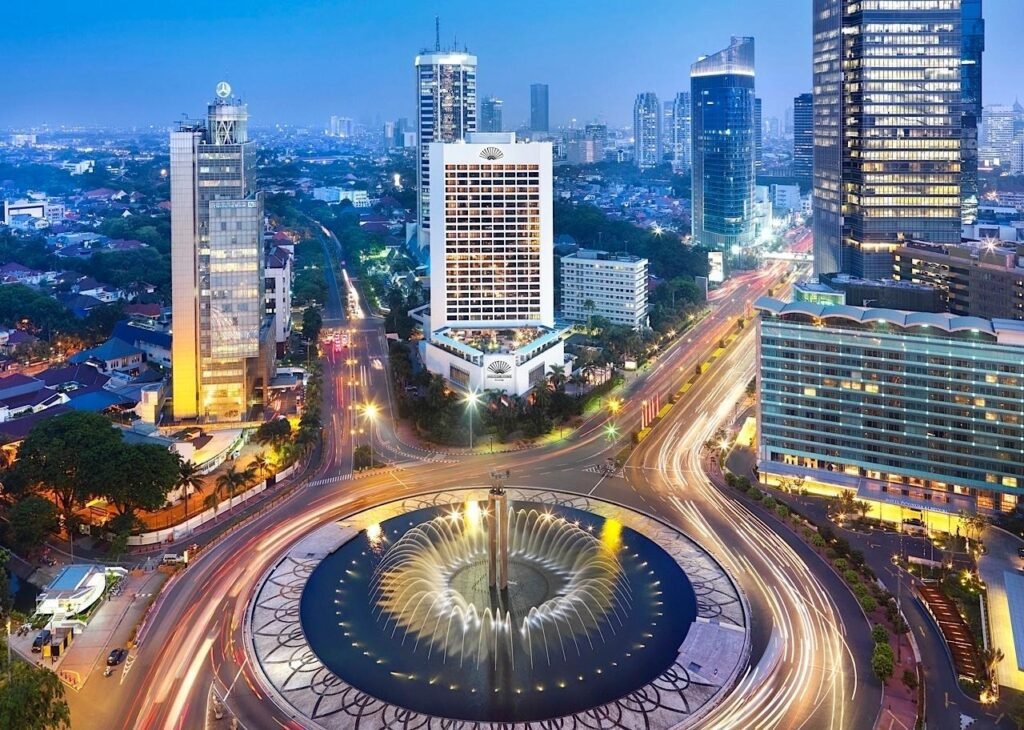
Lagos City
There is also the depth of market problem. The Nigerian Stock Exchange, for all its progress, simply does not have the institutional investor infrastructure that a $4 billion IPO demands. The kind of capital OPay needs to raise, at the scale and speed required, exists in New York, not Lagos. That is a structural failure of Nigeria’s capital market, and it is a failure that deserves its own reckoning. But it does not make the outcome any less frustrating.
Then there is the geopolitical layer. OPay’s Chinese ownership structure has already drawn scrutiny. Geopolitical tensions and questions about data governance tied to Chinese-owned apps operating in sensitive financial infrastructure could further complicate any regulatory environment and a US listing, paradoxically, may offer cleaner optics to some investors than a dual listing that amplifies the Nigeria connection.
None of these reasons are dishonest. All of them are, from OPay’s boardroom perspective, reasonable. But reasonable and right are not the same thing.
The Pattern That Should Disturb Us
OPay is not alone. This is a pattern. Foreign-backed companies enter Nigeria, use its scale and its people to validate their model, raise their next funding round on the strength of their Nigerian user numbers, and then structure their corporate entities, domicile their profits, and plan their exits in jurisdictions where Nigeria has no claim.
Jumia did it from Berlin. Andela did it from New York. And now OPay, a company whose entire value proposition rests on solving Nigerian financial exclusion, is preparing to hand Wall Street the returns that Nigerian investors helped generate.
The irony is almost architectural. A successful OPay listing would mark the largest technology IPO to emerge from Nigeria. Nigeria gets the headline. Wall Street gets the equity.
What Nigeria Should Do About It
This is not a call for protectionism or for regulators to punish OPay. That would be both counterproductive and legally complex. But it is a call for honesty about what Nigeria’s capital market must become and urgently.
If the NGX cannot attract a $4 billion IPO from a company that built its entire business in Nigeria, then that is a capital market emergency. Nigeria needs deeper liquidity pools, foreign currency-denominated instruments for locally listed tech firms, and a regulatory environment that makes dual listing genuinely attractive, not just theoretically possible.
It is also a call for Nigerian consumers to understand their own power. OPay’s 40 million users are not just customers. They are, in every meaningful sense, the company’s balance sheet. They deserve to be its shareholders too.
The Nigerians who stood at those green kiosks on rainy Mondays. The ones who sent ₦5,000 to a sick relative in a village with no bank. The ones who trusted a Chinese-owned app with their money when their own banks would not pick up the phone. They made OPay what it is.
Wall Street should not be the only one celebrating.
