


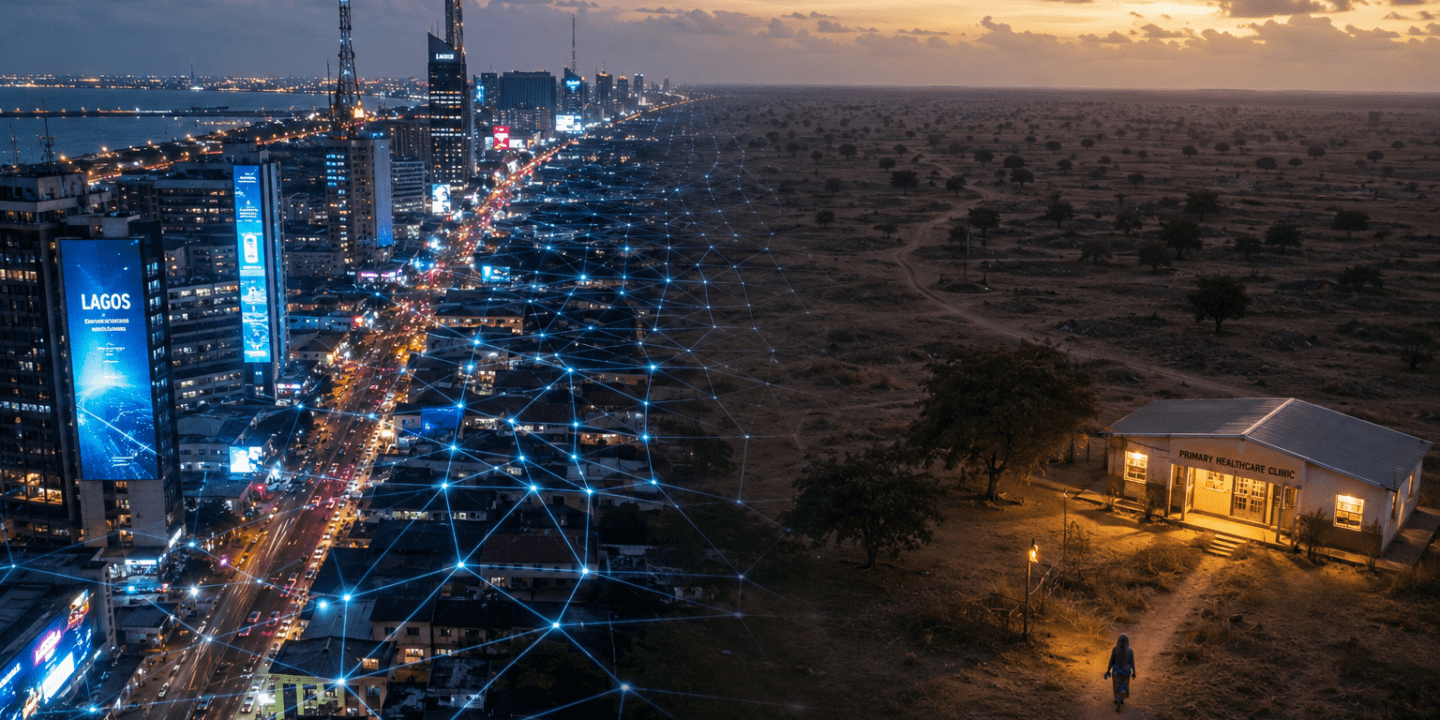
In the years following the COVID-19 pandemic, telehealth has become the most visible marker of Nigeria’s digital health revolution. With patients and doctors alike forced online by Covid-19. Startups rushed to fill the gap. Investor interest in African healthtech surged. For a brief, hopeful moment, it seemed like remote care might finally crack the code on Nigeria’s most stubborn healthcare problem: getting medical attention to the roughly 200 million Nigerians who do not live within easy reach of a well-equipped hospital. Six years on, the numbers, however, tell a more complicated story.

The Numbers Don’t Add Up
According to the 2026 State of Healthtech in Nigeria report, telehealth is the single largest subsector in Nigeria’s healthtech ecosystem by startup count, with 46 active companies operating across the country. That is more than double the next largest subsector, EMR/HMS, which counts 18 active startups. By headcount alone, telehealth looks like a thriving, competitive market.
But follow the money, and the picture shifts dramatically. Despite leading by startup count, telehealth ranks only fifth in total funding among all healthtech subsectors, with $28.9 million raised across the subsector’s entire history. Health Financing, by comparison, has attracted $63 million. Diagnostics has pulled in $57 million. Even EMR/HMS, with less than half the number of active startups, has secured $46 million in cumulative funding.
Put simply, the subsector that has produced the most companies has attracted some of the least capital. It is a paradox that raises a fundamental question: if telehealth is so clearly needed, why aren’t investors more willing to back it?
A Sector Built on Thin Air
Part of the answer lies in how telehealth startups are funded, or more accurately, how many of them are not funded at all. Of the 46 active startups in the subsector, only 27 have disclosed any funding. Nine remain entirely unfunded, and 11 have funding statuses that cannot be independently verified. That means roughly 43% of active telehealth startups are operating either without external capital or without any public record of it.
If this tells us anything, it is that it is not a sign of a healthy, bootstrapped ecosystem. It is a sign of a sector where many founders are building on hope, personal savings, and small grants — without the runway needed to reach sustainability. The most funded startups in the subsector, Cornie Health at $10 million, EHA Clinics at $4.1 million, HelpMum at $3 million, and CribMD at $2.7 million, are outliers in a landscape where the majority of players are chronically undercapitalized.
The consequences show up in the attrition data. The report notes that 19 telehealth startups are currently inactive, including eight that had previously raised between $3,000 and $130,000, small amounts that were ultimately insufficient to keep the lights on. These are not companies that failed for lack of a good idea. Many of them were addressing genuine, documented demand. They failed, at least in part, because they could not secure the capital needed to survive long enough to prove their model.

Why Investors Are Hesitant
Understanding investor reluctance requires looking at what makes telehealth a structurally difficult bet in the Nigerian context. Unlike e-pharmacy or supply chain startups, which move physical goods and generate relatively predictable transaction revenues, telehealth platforms are selling something harder to monetize: access to a consultation. In a market where out-of-pocket healthcare spending is the norm, convincing patients to pay for a virtual doctor visit, when they are already skeptical of digital services and accustomed to walking into a clinic, is a genuine commercial challenge.
Infrastructure makes this harder. Telehealth depends on reliable internet connectivity, smartphone penetration, and consistent power supply. Nigeria’s broadband penetration sat at just 48% as of mid-2025, and outside urban centers, the figures are considerably lower. A platform designed for video consultations is effectively useless to a patient in a rural area with intermittent 2G coverage. Startups that cannot crack the rural market are confined to competing for the same urban, educated, smartphone-equipped users, a segment that is large in absolute terms but small relative to Nigeria’s overall population, and one that is already well served.
There is also the question of adoption. The report highlights resistance among both patients and healthcare workers as a persistent barrier. Doctors accustomed to in-person consultations are often reluctant to shift their practice online. Patients, particularly older ones, are skeptical of diagnoses delivered through a screen. Building the behavioral change required for telehealth to become a default care pathway takes time and money that underfunded startups rarely have.
What Sustainable Telehealth Could Look Like
None of this means telehealth is a lost cause. The pandemic demonstrated that demand exists and can scale quickly when circumstances demand it. Startup activity in the subsector increased by 22% between the 2013–2019 period and the 2020–2024 period, reflecting genuine market interest. The question is whether the ecosystem can build on that momentum more durably.
The report points to several directions that could unlock the subsector’s potential. Integrating telehealth platforms with existing primary healthcare centers and pharmacies could dramatically expand reach without requiring patients to adopt entirely new behaviors. Offline-capable and low-bandwidth tools could open up rural markets that smartphone-first platforms cannot serve. Partnerships with telecommunications companies, including dedicated data bundles for health consultations, could reduce the cost barrier for both providers and patients.
On the financing side, the report calls for blended funding models that combine equity investment with grants and government support — particularly for startups targeting underserved populations where commercial returns are slower to materialize. The NHIA Act of 2022, which established the legal basis for mandatory health insurance in Nigeria, could eventually create a more reliable payment infrastructure for telehealth services, though implementation remains uneven.
The Cost of Getting This Wrong
Nigeria has a patient-to-physician ratio of just 1.1 per 10,000 people. Telehealth is one of the most viable tools available to stretch that ratio — to make one doctor’s time go further, to reach patients who cannot travel, to catch conditions before they become emergencies. The infrastructure for doing this at scale is being built, startup by startup, in Lagos and a handful of other cities.
But a sector where nearly half of active companies have no verified external funding, where 19 startups have already gone dark, and where the most critical subsector for healthcare access ranks fifth in investment, is not a sector on the cusp of transforming Nigerian healthcare. It is a sector in danger of promising more than it can deliver.
The potential is real. So is the risk of squandering it.





No Comments